Mobile Game Monetization: 4 Dominant Models in 2026
Advertisements
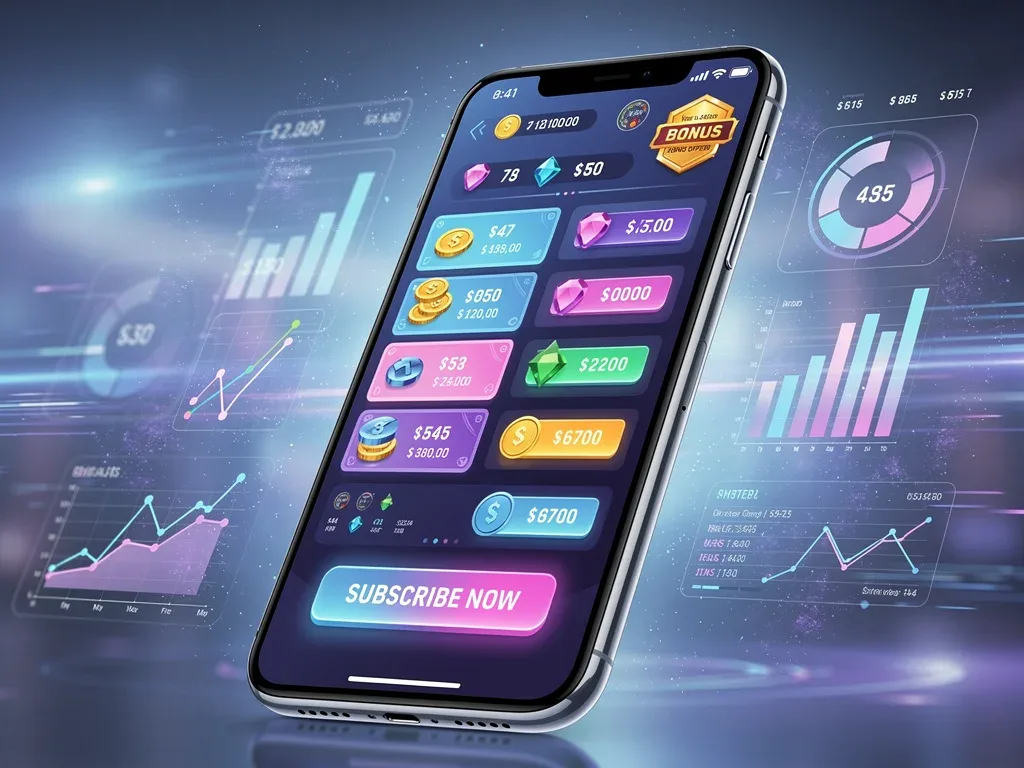
The mobile gaming industry in 2026 is largely defined by four dominant monetization models: in-app purchases, advertising, subscriptions, and hybrid approaches, each offering unique pathways for developers to generate revenue while engaging players.
Understanding Mobile Game Monetization: A Look at 4 Models Dominating the Market in 2026 is crucial for anyone involved in the dynamic world of mobile gaming. As the industry continues its rapid evolution, driven by technological advancements and shifting player expectations, the strategies developers employ to generate revenue are more sophisticated than ever. This article will delve into the core monetization models that are not just surviving but thriving in the competitive landscape of 2026, offering insights into their mechanisms, advantages, and challenges.
The Enduring Power of In-App Purchases (IAP)
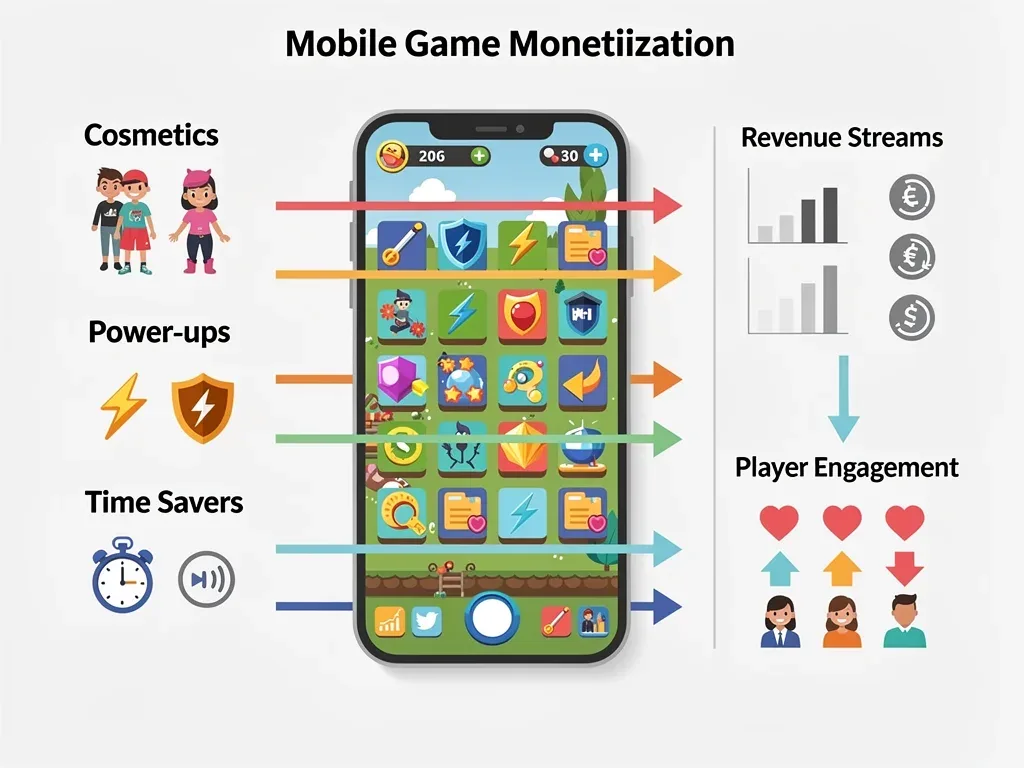
In-app purchases have been a cornerstone of mobile game monetization for over a decade, and in 2026, they remain incredibly potent. This model allows players to buy virtual goods, currency, or content directly within a game, enhancing their experience or accelerating their progress.
The success of IAPs hinges on providing value that players genuinely desire, whether it’s cosmetic customization, powerful upgrades, or time-saving advantages. Developers continuously refine their IAP strategies to balance revenue generation with player satisfaction, avoiding overt pay-to-win mechanics that can alienate a significant portion of their audience.
Types of In-App Purchases
- Consumables: Items that are used up, like extra lives, energy refills, or temporary boosts. These drive repeat purchases and are often crucial for progression in many games.
- Non-Consumables: Items that provide a permanent benefit, such as new characters, levels, or removal of ads. These offer a one-time value proposition that can significantly enhance the player experience.
- Subscriptions (within IAP framework): While a distinct model, many games offer premium passes or battle passes as IAPs that grant access to exclusive content over a period, blurring the lines between traditional IAP and subscription services.
Strategic Implementation of IAPs
Effective IAP integration requires careful design. Developers often introduce IAPs that address common player pain points or desires. For instance, offering a shortcut for a particularly grindy section of a game can be appealing to time-constrained players. Cosmetic items, which offer personalization without affecting gameplay balance, are also highly popular and can generate substantial revenue from dedicated fans.
The key is to make IAPs feel like an enhancement, not a requirement. Games that successfully implement IAPs often have strong core gameplay loops that are enjoyable even without spending, with purchases acting as an optional layer of convenience or customization. This approach fosters a healthier player economy and builds long-term loyalty.
Ultimately, in-app purchases continue to dominate because they offer flexibility and cater to a wide range of player motivations. From casual spenders to dedicated whales, IAPs provide diverse opportunities for players to engage with and support their favorite titles, ensuring their continued prominence in the 2026 mobile gaming landscape.
The Ubiquity of Ad Monetization
Ad monetization has evolved significantly, moving beyond intrusive banner ads to more integrated and player-friendly formats. In 2026, advertising remains a vital revenue stream, especially for hyper-casual games and titles targeting broad audiences. The art lies in delivering ads that are relevant, engaging, and minimally disruptive, often offering players a clear value exchange.
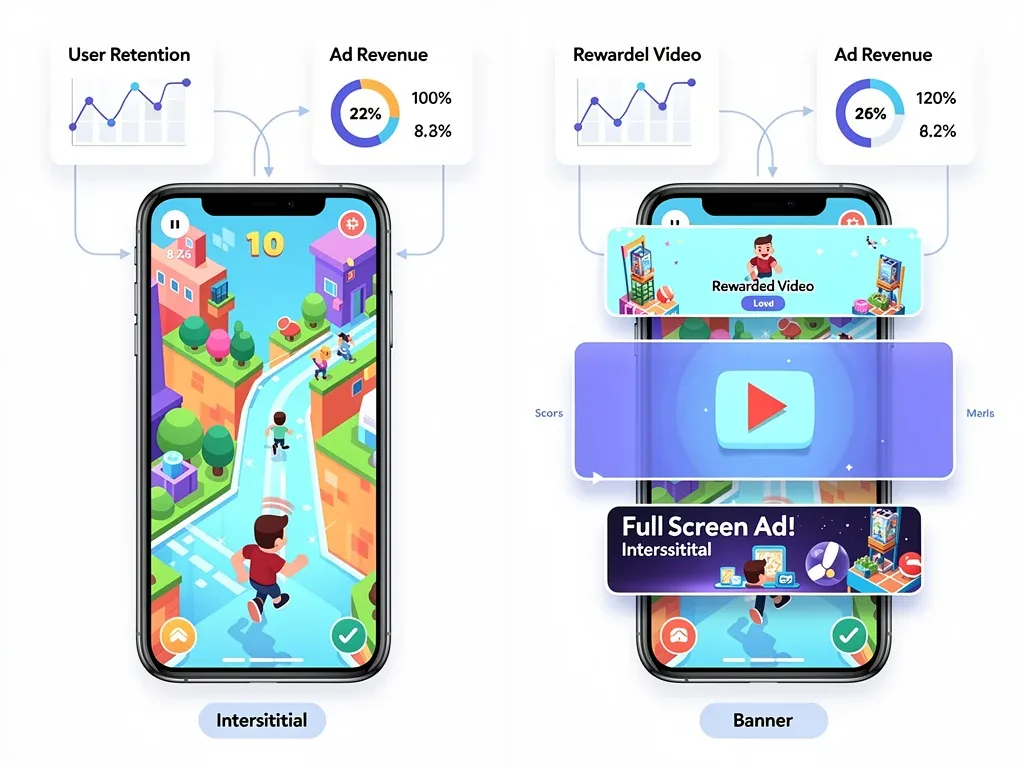
Rewarded video ads, in particular, have become a staple. Players opt to watch a short advertisement in exchange for in-game rewards like extra currency, power-ups, or continues. This voluntary interaction makes the advertising experience far more palatable and even desirable for players, leading to higher engagement rates and better conversion for advertisers.
Key Ad Formats in 2026
- Rewarded Video Ads: Players choose to watch an ad for an in-game reward. This is a win-win, offering players value and advertisers engaged viewers.
- Interstitial Ads: Full-screen ads that appear at natural breaks in gameplay, such as between levels or during loading screens. Timing is critical to avoid player frustration.
- Playable Ads: Interactive mini-games that allow players to experience a snippet of another game. These are highly effective for user acquisition, offering a direct taste of the product.
- Offerwall Ads: A list of tasks or offers (e.g., download another app, complete a survey) that players can complete in exchange for significant in-game rewards.
Balancing Ads with User Experience
The challenge with ad monetization is always striking the right balance between revenue generation and user experience. Over-saturation with ads can quickly lead to player churn. Developers are increasingly using sophisticated algorithms and A/B testing to optimize ad frequency, placement, and content, ensuring that ads enhance rather than detract from the gameplay.
Personalized advertising, driven by advanced data analytics, also plays a crucial role. By showing players ads that are more relevant to their interests, developers can increase ad effectiveness and reduce the perception of irrelevance. The goal is to make ads feel less like an interruption and more like a curated part of the overall game experience, especially in the competitive mobile market of 2026.
Ultimately, ad monetization, when implemented thoughtfully, allows developers to offer their games for free, expanding their audience reach significantly. The evolution of ad formats and the focus on player choice have cemented its position as a dominant and sustainable monetization model.
The Rise of Subscription Models
Subscription models, once primarily the domain of PC and console gaming, have firmly established their presence in the mobile space by 2026. These models offer players recurring access to premium content, exclusive features, or an ad-free experience in exchange for a regular fee. This provides a stable and predictable revenue stream for developers, fostering long-term engagement.
The appeal of subscriptions lies in their ability to offer a consistent, high-quality experience without the constant pressure of microtransactions or ad interruptions. For many players, a single monthly fee for a curated selection of games or enhanced access within a single title represents excellent value.
Varieties of Mobile Gaming Subscriptions
- Game Pass Services: Platforms like Apple Arcade or Google Play Pass offer access to a library of premium, ad-free games for a monthly fee. This model is gaining traction as players seek curated experiences.
- Premium Battle Passes/Season Passes: These offer tiered rewards and exclusive content over a specific season, often found in live-service games. Players pay a one-time fee per season or a recurring subscription for ongoing access to premium tracks.
- VIP Memberships: Within individual games, these subscriptions often provide daily bonuses, exclusive in-game items, ad removal, and other perks that enhance the regular gameplay loop.
Benefits for Developers and Players
For developers, subscriptions offer a more predictable revenue stream, which can fund ongoing content development and live operations. This stability allows for greater investment in game quality and player retention initiatives. It also shifts the focus from maximizing individual purchases to maximizing long-term player value.
Players benefit from a potentially richer, uninterrupted gaming experience. They often receive a greater volume of content or enhanced features for a fixed cost, removing the need to constantly evaluate individual purchases. This fosters a sense of community and loyalty, as subscribers are often the most engaged members of a game’s audience. The clear value proposition of subscription models makes them an increasingly attractive option for both sides of the mobile gaming ecosystem in 2026.
The Hybrid Monetization Approach: Best of All Worlds
In 2026, the most successful mobile games often don’t rely on a single monetization model but instead strategically combine elements from several. This hybrid approach allows developers to tap into multiple revenue streams while catering to diverse player preferences. By mixing and matching IAPs, ads, and even light subscription elements, games can optimize their economic models for maximum profitability and player satisfaction.
A common hybrid strategy involves offering a free-to-play game supported by ads, with an option to remove ads via a one-time IAP or a recurring subscription. Additionally, the game might feature various in-app purchases for cosmetics or progression boosts, ensuring that players have multiple ways to engage financially with the title.
Examples of Successful Hybrid Models
Consider a popular casual game that offers rewarded video ads for extra lives or currency. Alongside this, it sells cosmetic skins for characters via IAPs. Furthermore, it might introduce a monthly ‘VIP Pass’ that grants ad-free play, daily premium currency, and exclusive access to new game modes. This layered approach ensures that every player, regardless of their spending habits, can find a way to enjoy and support the game.
Another example could be a mid-core RPG that uses a battle pass system (a form of subscription/IAP) for seasonal rewards, while also selling individual power-up bundles through IAPs and occasionally featuring interstitial ads during loading screens for non-paying users. The careful integration of these elements ensures a robust economic ecosystem.
Optimizing Hybrid Strategies
The key to a successful hybrid model lies in careful balancing. Developers must ensure that the different monetization elements do not conflict or create a negative player experience. For example, ads should not feel mandatory for progression, and IAPs should not make the game feel unfair for non-spending players. Data analytics plays a crucial role in fine-tuning these models, allowing developers to understand player behavior and optimize their offerings.
A well-executed hybrid strategy maximizes revenue potential by appealing to both free-to-play and paying users, offering flexibility and choice. This adaptability is why hybrid monetization has become the de facto standard for many top-performing mobile games in 2026, representing the pinnacle of sophisticated mobile game economics.
The Role of Data Analytics in Monetization
In 2026, sophisticated data analytics are not just a tool but the backbone of effective mobile game monetization. Developers leverage vast amounts of player data to understand behavior, preferences, and spending patterns. This insight allows them to make informed decisions about pricing, content offerings, ad placements, and overall economic design, moving beyond guesswork to data-driven strategies.
Analytics help identify which IAPs are most popular, when players are most receptive to ads, and what content drives subscription sign-ups. By tracking metrics such as average revenue per user (ARPU), lifetime value (LTV), and churn rates, game studios can continuously optimize their monetization funnels and improve player retention.
Key Metrics for Monetization Success
- ARPU (Average Revenue Per User): Measures the average revenue generated from each active user, providing a quick snapshot of overall monetization effectiveness.
- LTV (Lifetime Value): Predicts the total revenue a player is expected to generate over their entire engagement with the game, crucial for long-term strategic planning.
- Conversion Rate: The percentage of players who make at least one purchase or engage with a monetization element. This helps gauge the effectiveness of IAP offers or ad placements.
- Churn Rate: The rate at which players stop playing the game. High churn can indicate issues with game balance or overly aggressive monetization.
Personalization and Predictive Analytics
Beyond basic metrics, advanced analytics enable deep personalization. Games can offer tailored IAP bundles based on a player’s progress, spending history, or in-game needs. For instance, a player struggling with a particular level might be offered a relevant power-up at a discounted price. This targeted approach significantly increases the likelihood of conversion.
Predictive analytics also plays a growing role, forecasting which players are likely to churn or become high-value spenders. This allows developers to proactively engage players with personalized offers or content to retain them or encourage further spending. The ability to anticipate player behavior is a powerful advantage in the competitive mobile gaming market of 2026, ensuring that monetization efforts are always relevant and timely.
In essence, data analytics transforms monetization from a trial-and-error process into a precise science. By understanding their players intimately, developers can craft monetization strategies that feel natural and valuable, rather than intrusive, contributing significantly to a game’s long-term success and player loyalty.
Ethical Considerations and Player Trust
As mobile game monetization models become more sophisticated, ethical considerations and the cultivation of player trust are paramount in 2026. Aggressive or manipulative monetization tactics can quickly erode a game’s reputation and lead to player backlash. Developers are increasingly aware that long-term success hinges on a transparent and fair approach to generating revenue.
Practices like loot boxes, while still present, are under increased scrutiny, leading many developers to offer clearer odds or alternative ways to acquire desired items. The line between enticing offers and coercive mechanics is constantly being re-evaluated, with a strong emphasis on maintaining a positive player experience.
Building and Maintaining Trust
- Transparency: Clearly communicate what players are purchasing and what they are receiving. Avoid deceptive pricing or unclear mechanics.
- Fairness: Ensure that free-to-play players can still enjoy and progress in the game without feeling unfairly disadvantaged against paying players. Avoid overt ‘pay-to-win’ scenarios.
- Player Choice: Empower players to choose how and when they engage with monetization. Rewarded ads, for example, are often preferred because they are opt-in.
- Value Proposition: Always ensure that any purchase or subscription offers genuine value that enhances the player’s experience, rather than simply fixing an artificially created problem.
The Impact of Regulation and Public Perception
Regulatory bodies in various regions are paying closer attention to game monetization, particularly concerning practices that might be perceived as gambling or predatory, especially towards younger audiences. This external pressure, combined with growing public awareness, compels developers to adopt more ethical frameworks.
Games that prioritize player well-being and offer fair monetization practices tend to build stronger, more loyal communities. This positive reputation can be a significant competitive advantage, leading to higher retention rates and organic growth. In 2026, ethical monetization is not just a moral imperative but a strategic necessity for sustained success in the mobile gaming market.
Ultimately, fostering player trust through ethical monetization practices ensures the longevity and positive perception of mobile games. It’s a commitment to a sustainable ecosystem where both developers and players can thrive, promoting a healthier and more enjoyable gaming environment for all.
| Key Monetization Model | Brief Description |
|---|---|
| In-App Purchases (IAP) | Players buy virtual goods, currency, or content directly within the game to enhance experience or progress. |
| Ad Monetization | Revenue generated through various ad formats, often rewarded videos, integrated strategically into gameplay. |
| Subscription Models | Players pay recurring fees for premium content, ad-free access, or exclusive in-game features. |
| Hybrid Approaches | Combines two or more monetization models to diversify revenue streams and cater to different player types. |
Frequently Asked Questions About Mobile Game Monetization
What is the most profitable mobile game monetization model in 2026?▼While In-App Purchases (IAP) still generate significant revenue, hybrid models that combine IAPs with targeted advertising and optional subscriptions are proving most profitable. This approach caters to a broader player base and diversifies revenue streams, offering flexibility and choice to users.
How do rewarded video ads benefit mobile game developers?▼Rewarded video ads offer a win-win for developers and players. Developers earn revenue from ad views, while players voluntarily watch ads in exchange for in-game rewards. This increases player engagement, improves retention, and provides a non-intrusive way to monetize the free-to-play audience.
Are mobile game subscriptions becoming more common?▼Yes, subscription models are increasingly common in mobile gaming. Services like Apple Arcade and Google Play Pass offer curated game libraries, while individual games provide VIP memberships or battle passes. This trend reflects a desire for predictable costs and premium, ad-free experiences among players.
What role does data analytics play in mobile game monetization?▼Data analytics is crucial for optimizing monetization. It helps developers understand player behavior, identify popular IAPs, and determine optimal ad placements. By tracking metrics like ARPU and LTV, studios can make data-driven decisions to enhance revenue, improve player retention, and personalize offers.
Why is ethical monetization important for mobile games in 2026?▼Ethical monetization builds player trust and ensures long-term success. Avoiding predatory practices, maintaining transparency, and offering fair value propositions prevent player backlash and foster loyal communities. A positive reputation, driven by ethical design, is a significant competitive advantage in today’s mobile gaming market.
Conclusion
The mobile game monetization landscape in 2026 is a complex yet fascinating ecosystem, primarily shaped by four dominant models: in-app purchases, ad monetization, subscriptions, and the increasingly prevalent hybrid approach. Each model offers distinct advantages and challenges, requiring developers to adopt nuanced strategies to thrive. The key to success lies not just in implementing these models, but in understanding player psychology, leveraging robust data analytics, and, critically, maintaining ethical practices to build and sustain player trust. As technology evolves, so too will these models, but the fundamental principles of delivering value and respecting the player experience will remain paramount for any game aspiring to dominate the market.