Mobile Gaming Hardware Upgrades 2026: Is Your Device Ready?
Advertisements
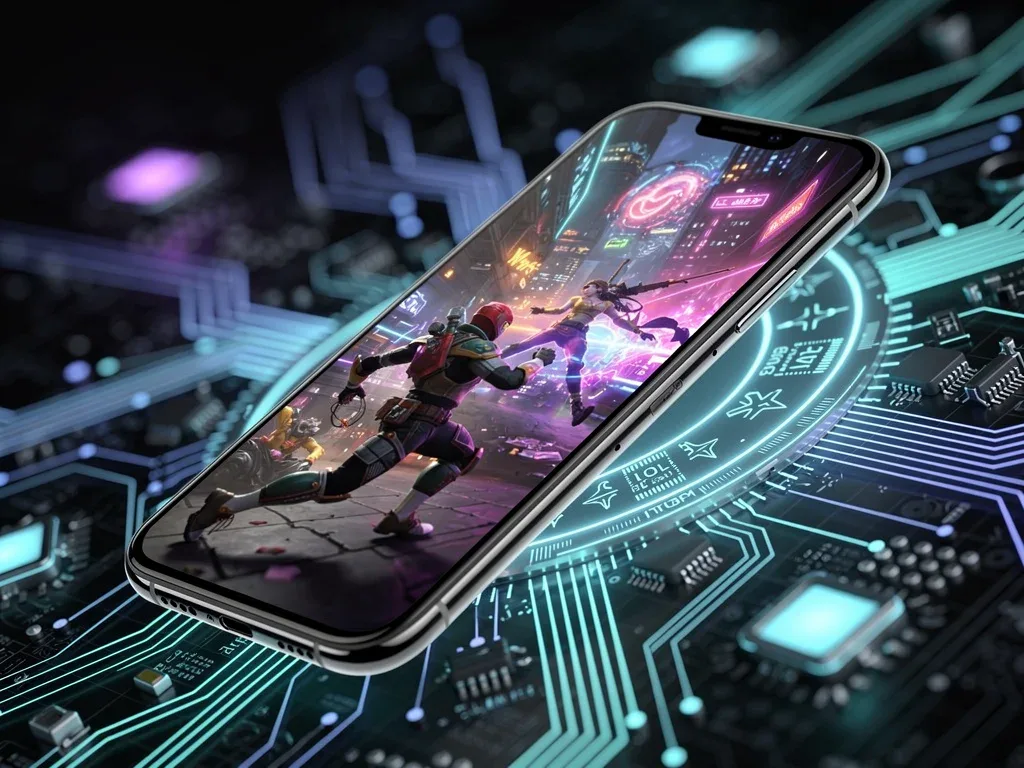
As 2026 approaches, mobile gaming demands more powerful hardware, necessitating a look into essential upgrades to ensure your device can deliver the immersive experiences next-generation titles promise.
The landscape of mobile gaming is evolving at an unprecedented pace, with developers pushing the boundaries of what’s possible on handheld devices. As we approach 2026, the question on every gamer’s mind is: Are you prepared for the next wave of immersive experiences? This article delves into the critical mobile gaming hardware upgrades that will define the future, helping you determine if your current device is ready or if an upgrade is on the horizon.
The relentless evolution of mobile processors
At the heart of every powerful mobile gaming experience lies a robust processor. As games become more graphically intensive and complex, the demands on system-on-a-chip (SoC) solutions grow exponentially. For 2026, we are not just talking about incremental improvements; we are looking at a fundamental leap in processing power, driven by advancements in chip architecture and manufacturing processes.
These new processors are designed to handle real-time ray tracing, advanced AI for non-player characters, and complex physics simulations that were once exclusive to high-end PCs and consoles. Understanding the capabilities of these new chips is paramount for any serious mobile gamer.
Next-generation chip architecture
The move towards smaller nanometer processes, such as 3nm and even 2nm, is enabling manufacturers to pack more transistors into a smaller footprint. This not only boosts raw computational power but also improves energy efficiency, a crucial factor for mobile devices that rely on battery life. The integration of specialized neural processing units (NPUs) is also becoming standard, enhancing AI-driven features within games and even optimizing the device’s overall performance.
- Increased Core Counts: More cores allow for better multitasking and distribution of computational load, crucial for complex game engines.
- Higher Clock Speeds: Faster clock speeds translate directly to quicker processing of game logic and graphics rendering.
- Advanced Cache Systems: Optimized cache memory reduces latency, ensuring data is readily available for the CPU and GPU.
- Integrated AI Accelerators: Dedicated hardware for AI tasks can offload processing from the main CPU, improving efficiency and enabling more sophisticated in-game AI.
The continuous innovation in mobile processor technology ensures that each new generation of devices offers a significant performance uplift. Gamers who prioritize the latest titles with the best graphics will find these processor upgrades indispensable for a smooth and responsive experience, making the current generation of mobile gaming hardware upgrades a topic of keen interest.
GPU advancements: unlocking visual fidelity
While the CPU handles the game’s logic, the graphics processing unit (GPU) is responsible for rendering the stunning visuals that define modern mobile games. For 2026, mobile GPUs are set to achieve levels of fidelity and complexity that were unimaginable just a few years ago, bringing console-quality graphics to the palm of your hand.
These advancements are not merely about pushing more pixels; they involve sophisticated rendering techniques, improved shader performance, and the integration of hardware-accelerated features like ray tracing, which simulates light behavior for incredibly realistic scenes. A powerful GPU is the cornerstone of an immersive visual experience.
Ray tracing and global illumination
Ray tracing, once a hallmark of high-end PC gaming, is now making its way into mobile SoCs. This technology dramatically enhances lighting, shadows, and reflections, making game worlds feel more lifelike and dynamic. Global illumination, another advanced rendering technique, further contributes to realistic lighting by simulating how light bounces off surfaces.
- Dynamic Lighting: Games will feature more realistic and interactive light sources, responding accurately to environmental changes.
- Enhanced Reflections: Surfaces will accurately reflect their surroundings, adding depth and realism to textures and environments.
- Realistic Shadows: Shadows will be softer, more detailed, and react dynamically to light sources, eliminating jagged edges and unrealistic outlines.
- Improved Anti-Aliasing: Advanced anti-aliasing techniques will smooth out jagged edges, making graphics appear cleaner and more polished.
The integration of these advanced graphical features means that games will look more spectacular than ever before. However, this visual splendor comes at a cost: it demands significantly more powerful GPUs. Devices without these cutting-edge graphical capabilities may struggle to render next-generation titles at acceptable frame rates or with all visual effects enabled, underscoring the importance of considering mobile gaming hardware upgrades.
RAM and storage: the backbone of seamless gaming
Beyond the CPU and GPU, sufficient RAM (Random Access Memory) and fast storage are crucial components that contribute to a smooth and responsive mobile gaming experience. As games grow in size and complexity, they require more memory to load assets quickly and more storage to accommodate their expansive files.
In 2026, we anticipate a significant increase in the baseline requirements for both RAM and internal storage. Without adequate provisions in these areas, even the most powerful processors and GPUs can be bottlenecked, leading to frustrating load times, stuttering gameplay, and an overall diminished experience.
Faster RAM and expansive storage solutions
The transition to faster RAM technologies, such as LPDDR5X and beyond, will allow devices to access game data more quickly, reducing loading screens and improving in-game performance. Similarly, the adoption of UFS 4.0 and future storage standards will provide blazing-fast read and write speeds, making game installations and asset streaming almost instantaneous.
- Increased RAM Capacity: Modern games will demand 12GB, 16GB, or even 24GB of RAM to ensure smooth operation without constant asset reloading.
- Faster RAM Speeds: Higher memory bandwidth will reduce latency and accelerate data transfer between components.
- UFS 4.0 and Beyond: Next-gen storage offers significantly faster read/write speeds, drastically cutting down load times and improving overall system responsiveness.
- Larger Storage Options: With game sizes easily exceeding 50GB, 256GB, 512GB, or even 1TB internal storage options will become standard for serious gamers.
These advancements ensure that games can load quickly, run without hitches, and store all necessary files without compromising performance. For those looking to keep their devices competitive, paying close attention to RAM and storage specifications is just as important as evaluating the processor and GPU when considering mobile gaming hardware upgrades for 2026.
Display technology: immersive visuals and responsiveness
The display is your window into the game world, and advancements in screen technology are making that window more vibrant, responsive, and immersive than ever before. For 2026, mobile devices will feature displays that offer higher refresh rates, better color accuracy, and improved brightness, all contributing to a superior visual experience.
These enhancements are not just about making games look prettier; they also directly impact gameplay, offering smoother animations and more responsive input. A high-quality display is essential for fully appreciating the graphical prowess of next-generation mobile titles and is a key area for mobile gaming hardware upgrades.
High refresh rates and OLED panels
High refresh rate displays (120Hz, 144Hz, or even higher) provide incredibly fluid motion, making fast-paced games feel more responsive and reducing motion blur. Coupled with advanced OLED panels, which offer perfect blacks, infinite contrast, and vibrant colors, the visual experience becomes truly breathtaking. The integration of adaptive refresh rate technologies also helps conserve battery life by adjusting the refresh rate based on content.
- 120Hz+ Refresh Rates: Essential for smooth gameplay, reducing input lag and enhancing the feeling of responsiveness.
- OLED/AMOLED Technology: Delivers superior contrast, deeper blacks, and wider color gamuts for stunning visuals.
- Higher Resolution: QHD+ or even 4K resolutions on larger mobile displays will provide incredible detail and sharpness.
- Improved Brightness and HDR Support: Brighter screens with HDR capabilities will make games pop with more vibrant highlights and detailed shadows.
The combination of high refresh rates and advanced display technologies ensures that every frame rendered by the powerful GPU is displayed with maximum clarity and fluidity. This is particularly important for competitive gaming, where every millisecond and visual detail can make a difference. Therefore, a device with a cutting-edge display is a significant mobile gaming hardware upgrade for 2026.
Battery life and cooling solutions: sustaining performance
With all the talk about powerful processors, stunning GPUs, and vibrant displays, it’s easy to overlook two critical components that enable sustained high performance: battery life and cooling solutions. A device can have the most powerful hardware, but if it can’t maintain performance due to overheating or if the battery drains too quickly, the gaming experience will suffer.
For 2026, manufacturers are focusing heavily on optimizing power consumption and developing more efficient cooling systems to ensure that mobile devices can handle extended gaming sessions without throttling performance. These aspects are often the unsung heroes of mobile gaming hardware upgrades.
Advanced battery technology and thermal management
New battery technologies, such as silicon-anode batteries, promise higher energy density, leading to longer lasting devices without increasing physical size. Coupled with faster charging technologies, gamers can spend less time tethered to an outlet. On the cooling front, vapor chambers, graphite sheets, and even active cooling systems are becoming more common to dissipate heat effectively, preventing performance degradation during intense gaming.
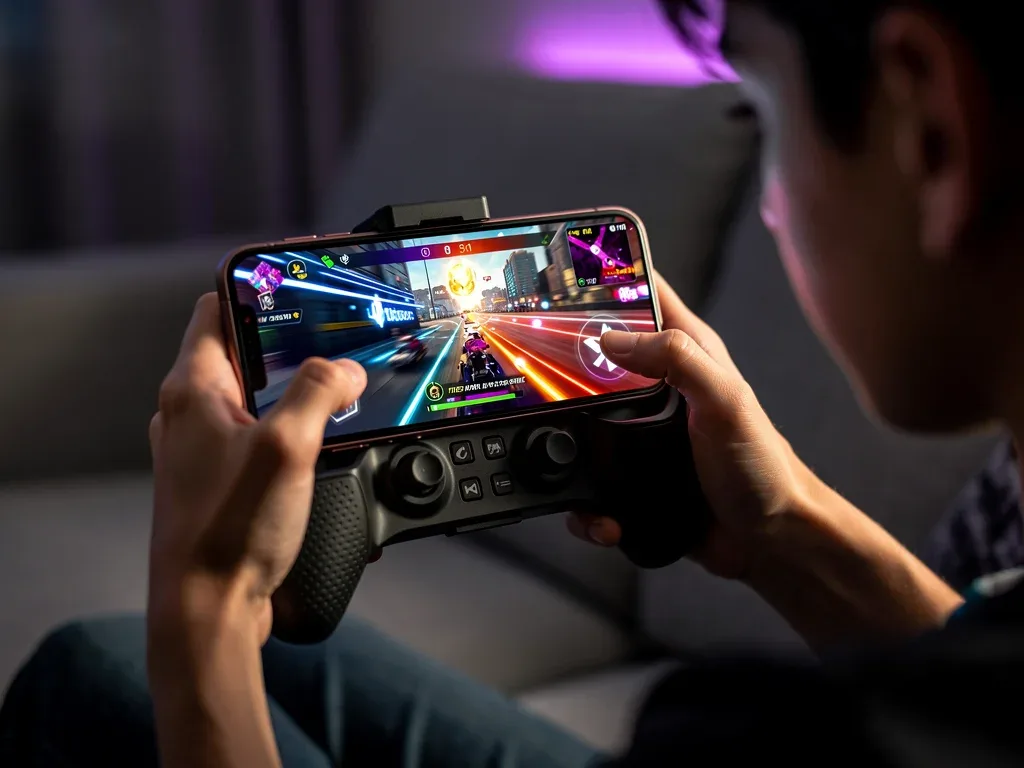
- Larger Battery Capacities: Devices will feature batteries with capacities exceeding 5000mAh, pushing towards 6000mAh or more for extended play.
- Faster Charging: Charging speeds of 100W or even 200W will become more prevalent, allowing for quick top-ups.
- Efficient Cooling Systems: Vapor chambers and advanced thermal pastes will become standard to manage heat generated by high-performance components.
- Software Optimizations: AI-driven power management will intelligently allocate resources, extending battery life without compromising performance.
These behind-the-scenes innovations are crucial for delivering a consistent and enjoyable gaming experience. A device that can maintain peak performance for hours without overheating or running out of juice is invaluable for serious mobile gamers, making battery and cooling solutions essential mobile gaming hardware upgrades to consider.
Connectivity and peripherals: enhancing the gaming ecosystem
Beyond the core hardware of the device itself, the surrounding ecosystem of connectivity options and gaming peripherals plays a significant role in elevating the mobile gaming experience. As mobile games become more sophisticated, the need for stable, high-speed internet and precise control methods becomes increasingly important.
For 2026, we expect to see further integration of advanced wireless technologies and a broader array of dedicated gaming accessories designed to bridge the gap between mobile and traditional console gaming. These external elements are often overlooked when discussing mobile gaming hardware upgrades, but they are vital for a complete experience.
5G, Wi-Fi 7, and dedicated gaming controllers
The widespread rollout of 5G networks and the advent of Wi-Fi 7 will provide ultra-low latency and incredibly fast download speeds, crucial for cloud gaming and seamless online multiplayer experiences. Concurrently, the market for dedicated mobile gaming controllers, often designed with ergonomic comfort and precise inputs, will continue to expand, offering a superior alternative to touchscreen controls for complex games.
- 5G Connectivity: Ensures stable, high-speed internet for cloud gaming and online multiplayer without lag.
- Wi-Fi 7 (802.11be): Offers even faster local network speeds and lower latency for home gaming setups.
- Bluetooth 5.3 and LE Audio: Provides more reliable and power-efficient connections for wireless peripherals like headphones and controllers.
- Dedicated Gaming Peripherals: Ergonomic controllers, cooling attachments, and even external display support will become more commonplace, enhancing gameplay.
The synergy between powerful internal hardware and a robust external ecosystem is what truly defines the next generation of mobile gaming. Investing in these connectivity and peripheral upgrades can significantly enhance your enjoyment and competitiveness, making them critical considerations in the broader discussion of mobile gaming hardware upgrades for 2026.
Is your current device ready for 2026? A self-assessment
After exploring the various facets of mobile gaming hardware upgrades for 2026, the pertinent question remains: is your current device up to snuff? The answer isn’t always straightforward, as it depends heavily on the types of games you play and your expectations for performance and visual fidelity. However, a systematic self-assessment can help you make an informed decision.
Consider the age of your device, its core specifications, and how it currently handles demanding titles. If you are experiencing frequent frame drops, long load times, or a quickly draining battery, these are clear indicators that an upgrade might be beneficial. The goal is to ensure a fluid, enjoyable experience, not just to run games at their lowest settings.
Key indicators for an upgrade
Start by checking your device’s processor model, RAM capacity, and storage type. Compare these against the emerging standards for 2026. A device released in 2023 or later with a flagship-tier SoC might still hold its own, especially if it boasts sufficient RAM and fast storage. Older devices, however, are more likely to struggle with the advanced demands of next-gen titles. Pay attention to the display’s refresh rate and battery health, as these significantly impact the gaming experience.
- Processor Benchmark Scores: Compare your device’s SoC performance against recent benchmarks for next-gen mobile processors.
- RAM and Storage Type: Ensure you have at least 12GB of LPDDR5X RAM and UFS 4.0 storage for optimal performance.
- Display Specifications: A 120Hz+ OLED display with good brightness and HDR support will be crucial for visual immersion.
- Thermal Performance: Observe if your device overheats or throttles performance during extended gaming sessions.
- Battery Degradation: A significantly degraded battery will severely limit your gaming time and overall enjoyment.
Ultimately, the decision to upgrade hinges on your personal gaming habits and budget. If you primarily play casual games, your current device might suffice. However, for enthusiasts eager to experience the cutting edge of mobile gaming, investing in the latest mobile gaming hardware upgrades for 2026 will be a worthwhile endeavor, ensuring you are fully prepared for what the future holds.
| Key Upgrade Area | Impact on Gaming |
|---|---|
| Mobile Processors | Enables complex game logic, AI, and overall system responsiveness. |
| GPU Advancements | Delivers stunning visual fidelity, ray tracing, and realistic graphics. |
| RAM & Storage | Ensures fast loading times, smooth multitasking, and ample game storage. |
| Display Technology | Provides immersive visuals with high refresh rates and vibrant colors. |
Frequently asked questions about mobile gaming hardware in 2026
What are the most critical mobile gaming hardware upgrades for 2026?▼The most critical upgrades include next-gen mobile processors with advanced AI, GPUs supporting hardware-accelerated ray tracing, faster and larger RAM (LPDDR5X+), and ultra-fast storage (UFS 4.0+). These components collectively enable the immersive and graphically demanding experiences expected in 2026.
Will my current smartphone be obsolete for 2026 mobile games?▼It depends on its age and specifications. Devices released before 2024, especially mid-range models, might struggle with next-gen titles at optimal settings. Flagship devices from 2024-2025 may still offer a decent experience, but without the latest GPU and processor advancements, they might not fully leverage new graphical features.
How important is battery life for next-gen mobile gaming?▼Extremely important. Powerful hardware consumes more energy. For sustained high-performance gaming, devices in 2026 will require larger battery capacities (5000mAh+) and efficient thermal management to prevent throttling and ensure longer play sessions without constant recharging. Fast charging is also a key complementary feature.
What role will display technology play in 2026 mobile gaming?▼Display technology is crucial for visual immersion and responsiveness. High refresh rate OLED panels (120Hz+) will be standard, offering smoother gameplay, vibrant colors, and deep contrasts. Features like HDR support and higher resolutions will further enhance the visual fidelity, making games look more stunning.
Are gaming peripherals necessary for future mobile gaming?▼While not strictly necessary for all games, dedicated gaming peripherals like ergonomic controllers will significantly enhance the experience for complex titles. They offer superior precision and comfort over touch controls, bridging the gap between mobile and console gaming, especially for competitive or graphically intensive genres.
Conclusion
The journey towards 2026 promises a thrilling evolution in mobile gaming, driven by significant advancements in hardware. From the raw power of next-generation processors and GPUs to the supporting roles of faster RAM, expansive storage, and stunning display technologies, every component plays a vital part in crafting the immersive experiences that await us. While the pace of innovation can make keeping up feel like a challenge, understanding these key mobile gaming hardware upgrades allows you to make informed decisions about your device. Whether you choose to upgrade or optimize your current setup with peripherals and software, being prepared ensures you won’t miss out on the incredible gaming adventures the future holds. The mobile gaming landscape is dynamic and exciting, and with the right hardware, you’ll be ready to conquer any virtual world that comes your way.