Nintendo Switch Sales Surge 15% in Q4 2025, Setting New Records
Advertisements
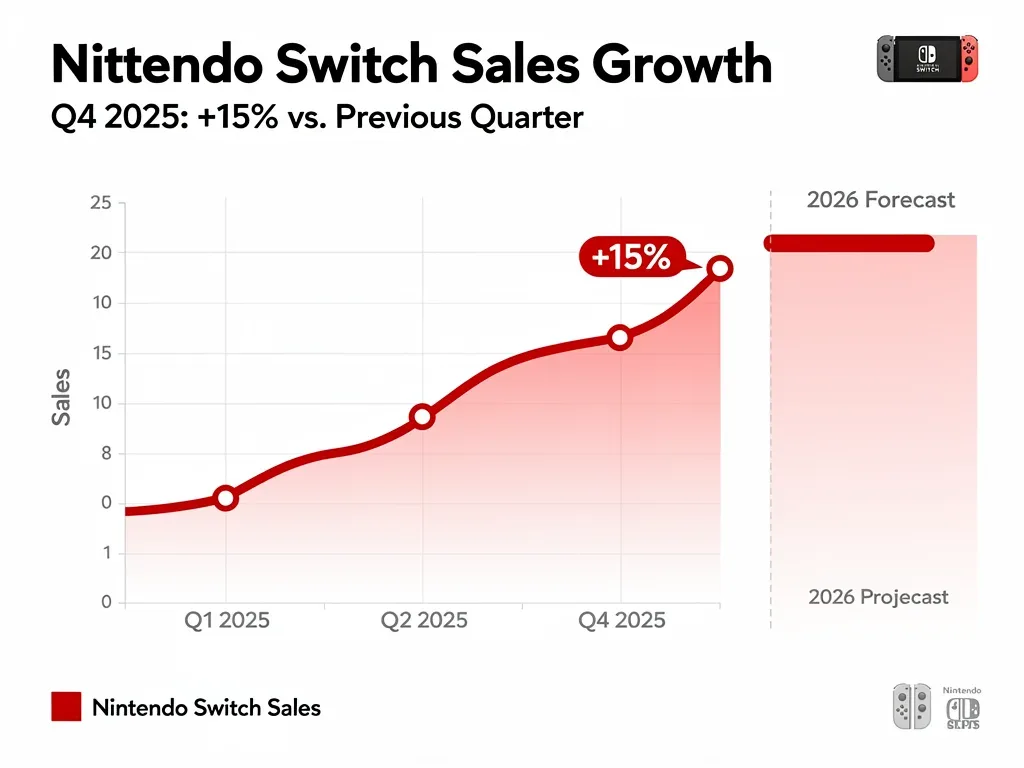
Nintendo Switch sales experienced an impressive 15% surge in Q4 2025, establishing new benchmarks and igniting considerable excitement for upcoming 2026 titles, underscoring the console’s enduring market strength.
The gaming world is buzzing with the news: Nintendo Switch sales have surged by an astonishing 15% in Q4 2025, marking an unprecedented milestone for the console. This remarkable growth not only sets new industry records but also builds immense anticipation for what Nintendo has in store for its 2026 releases. What factors are fueling this incredible momentum, and what does it mean for the future of gaming?
Unpacking the Q4 2025 Sales Phenomenon
The latest financial reports from Nintendo reveal a truly extraordinary performance for the Switch console during the fourth quarter of 2025. This 15% increase in sales isn’t just a number; it represents a robust and sustained demand for the hybrid console, even years after its initial launch. Analysts are dissecting the various elements contributing to this surge, pointing to a confluence of strategic decisions, evergreen content, and evolving market dynamics.
Understanding this phenomenon requires a closer look at both internal and external factors. Nintendo’s consistent ability to innovate, coupled with a deep understanding of its audience, continues to pay dividends. The company has skillfully navigated a competitive landscape, proving that unique gameplay experiences and strong first-party titles remain paramount.
Strategic Pricing and Bundle Deals
One significant driver behind the Q4 2025 sales surge has been Nintendo’s tactical approach to pricing and promotional bundles. Throughout the holiday season and leading up to the end of the fiscal year, Nintendo offered various enticing packages that made the Switch an irresistible option for both new buyers and those looking to upgrade.
- Value-added bundles: Many deals included popular games or accessories at a reduced combined price, maximizing perceived value.
- Limited-edition consoles: Special edition Switch models tied to major game releases or anniversaries created collector’s demand.
- Entry-level options: The continued availability and competitive pricing of the Switch Lite appealed to budget-conscious consumers.
Evergreen First-Party Titles
Nintendo’s unparalleled library of first-party games continues to be a core pillar of the Switch’s success. Even without a constant stream of brand-new AAA releases, titles like Mario Kart 8 Deluxe, Animal Crossing: New Horizons, and The Legend of Zelda: Tears of the Kingdom consistently rank high on sales charts, demonstrating their enduring appeal and ability to attract new players.
These games act as powerful console sellers, drawing in consumers who want to experience the unique gameplay that only Nintendo can offer. The replayability and broad family appeal of these titles ensure a continuous demand, contributing significantly to the overall sales figures year after year.
In essence, the Q4 2025 sales surge is a testament to Nintendo’s multifaceted strategy, blending smart business tactics with creative game development. The company’s ability to maintain relevance and desirability in a fast-paced industry speaks volumes about its foundational strengths and forward-thinking approach.
The Anticipation for 2026 Releases
The record-breaking sales in Q4 2025 aren’t just about past performance; they serve as a powerful springboard for Nintendo’s ambitious plans for 2026. The company has strategically teased a robust lineup of upcoming titles, creating an environment of intense anticipation that is undoubtedly influencing current purchasing decisions. Gamers are investing in the Switch now, knowing that exciting new experiences are just around the corner.
This forward-looking excitement is a critical component of Nintendo’s sustained success. The promise of innovative gameplay, beloved characters, and groundbreaking hardware enhancements keeps the community engaged and eager for what’s next. It’s a carefully orchestrated dance between current offerings and future promises.
Confirmed and Rumored Titles
While Nintendo is known for its secrecy, several titles have either been officially announced or heavily rumored for 2026, fueling speculation and pre-purchase enthusiasm. These potential blockbusters span various genres, catering to the diverse tastes of the Switch’s massive player base.
- Major franchise sequels: Expectations are high for new installments in iconic series like Metroid Prime 4 and a potential new Donkey Kong adventure.
- Innovative new IPs: Nintendo is also expected to introduce entirely new intellectual properties, showcasing its commitment to originality.
- Third-party support: Enhanced collaborations with third-party developers promise a wider array of games, leveraging the Switch’s unique capabilities.
Hardware Speculation and the ‘Switch 2’
Perhaps the most significant factor driving anticipation for 2026 is the persistent speculation surrounding a potential successor to the Nintendo Switch, often dubbed the ‘Switch 2’ or ‘Switch Pro.’ While Nintendo has remained tight-lipped, the industry is rife with rumors about improved graphics, processing power, and new features.
This speculation creates a unique dynamic where current Switch sales are bolstered by the idea that even if a new console arrives, the existing library will likely remain compatible, or the new console will offer a significant upgrade path. Consumers feel confident in their purchase, knowing that their investment is future-proofed to some extent. The anticipation for new hardware, even if unconfirmed, significantly contributes to the overall buzz surrounding Nintendo’s future.
Impact on the Gaming Industry Landscape
The continued dominance and surging sales of the Nintendo Switch have profound implications for the broader gaming industry. In an era dominated by powerful next-gen consoles from Sony and Microsoft, Nintendo has carved out and maintained its own unique space, proving that raw graphical power isn’t the only metric for success. This performance reinforces several key trends and challenges for competitors.
Nintendo’s success story often serves as a case study for innovative hardware design and content strategy. It demonstrates that a focus on unique gameplay mechanics, portability, and strong intellectual properties can create a highly resilient and profitable ecosystem, even against formidable competition.
Diversification of Console Experiences
The Switch’s success highlights the growing demand for diverse gaming experiences. Not every gamer prioritizes ultra-realistic graphics or high frame rates; many seek convenience, portability, and innovative social gameplay. Nintendo has masterfully tapped into this segment of the market.
- Hybrid model validation: The success validates the hybrid console concept, allowing seamless transitions between TV and handheld play.
- Casual and family gaming: Nintendo continues to be the undisputed leader in attracting casual gamers and families, expanding the overall gaming market.
- Creative gameplay over horsepower: The Switch demonstrates that clever game design and unique mechanics can be more compelling than raw computational power alone.
Challenges for Competitors
For Sony and Microsoft, the Switch’s enduring popularity presents both a challenge and an opportunity. It forces them to consider how they can diversify their own offerings beyond traditional high-fidelity gaming. While they excel in the high-end market, Nintendo’s success shows there’s a vast appetite for alternative approaches.
This dynamic encourages the entire industry to think more broadly about what constitutes a ‘gaming experience.’ It pushes boundaries and fosters innovation, ultimately benefiting consumers with a wider range of choices and playstyles. The Switch’s performance is a clear indicator that the gaming landscape is more varied and vibrant than ever before.
The Role of Software and Services in Sustained Growth
While hardware sales are often the headline, the underlying strength of Nintendo’s ecosystem lies in its robust software sales and growing digital services. The 15% surge in Q4 2025 is not solely attributable to console units; it’s deeply intertwined with the continuous purchase of games, DLC, and subscriptions like Nintendo Switch Online. This integrated approach ensures a recurring revenue stream and keeps players engaged with the platform long after their initial purchase.
Nintendo has cultivated a strong relationship with its user base, offering a compelling blend of classic and modern content. This strategy creates a sticky ecosystem where players are incentivized to remain within the Nintendo family, further contributing to the console’s impressive financial performance.
Digital Sales and E-Shop Performance
The Nintendo eShop has become a crucial channel for software distribution, with digital sales continuing to grow year over year. This shift towards digital purchases offers higher profit margins for Nintendo and greater convenience for consumers. The Q4 2025 report likely reflects a significant contribution from digital game sales, including both full titles and smaller, indie offerings.
- Indie game prominence: The eShop has become a haven for independent developers, offering a vast array of unique games that attract diverse audiences.
- Seasonal sales and promotions: Regular discounts and curated sales events drive impulse purchases and encourage exploration of the game library.
- DLC and expansions: Post-launch content keeps existing games fresh and provides additional revenue streams.
Nintendo Switch Online and Value Proposition
Nintendo Switch Online (NSO) plays an increasingly vital role in retaining users and enhancing the value proposition of the console. Offering online multiplayer, cloud saves, and a library of classic NES, SNES, N64, and Game Boy titles, NSO adds significant value for a relatively low subscription fee. The expansion pack, with its additional console libraries and DLC, further sweetens the deal.
The continuous evolution of NSO, with new games and features added regularly, ensures that the service remains attractive. This subscription model contributes to the overall stickiness of the platform, making it harder for users to leave the Nintendo ecosystem. The synergy between hardware, software, and services is a core reason behind the Switch’s sustained growth.
Geographical Market Performance and Trends
The impressive 15% sales surge in Q4 2025 for the Nintendo Switch was not uniform across all global markets. While the console performed exceptionally well overall, certain geographical regions demonstrated particularly strong growth, indicating nuanced market trends and consumer preferences. Understanding these regional differences provides deeper insights into Nintendo’s global strategy and areas of opportunity.
Analyzing geographical performance helps to identify key markets where Nintendo’s marketing efforts, localized content, or specific game releases resonated most strongly. This granular data is crucial for refining future strategies and maintaining momentum in a diverse global landscape.
Stronghold in North America and Japan
North America and Japan continued to be critical strongholds for Nintendo Switch sales, with both regions reporting significant contributions to the Q4 2025 surge. In North America, aggressive holiday promotions and the enduring popularity of family-friendly titles likely played a major role. Japanese consumers, known for their loyalty to Nintendo and appreciation for innovative handheld gaming, also showed robust engagement.
The cultural resonance of Nintendo’s characters and franchises in these markets creates a powerful advantage. Marketing campaigns are often highly tailored to these regions, leveraging local influencers and cultural events to maximize impact and drive consumer interest. This localized approach is a cornerstone of Nintendo’s global success.
Emerging Market Growth
Beyond established markets, the Nintendo Switch also saw notable growth in several emerging territories. Increased availability, improved distribution networks, and a growing middle class with disposable income contributed to this expansion. Nintendo’s efforts to penetrate these markets with more accessible pricing models and localized content strategies appear to be bearing fruit.
The versatility of the Switch, appealing to both traditional console gamers and those seeking portable entertainment, makes it a strong contender in diverse economic environments. As these emerging markets continue to develop, they represent a significant long-term growth opportunity for Nintendo, further cementing the console’s global footprint.
Challenges and Future Outlook for Nintendo
Despite the stellar performance in Q4 2025, Nintendo faces inherent challenges as it looks towards 2026 and beyond. The gaming industry is notoriously dynamic, with rapid technological advancements and shifting consumer expectations. Maintaining a 15% sales surge year after year is a monumental task, requiring continuous innovation and strategic foresight. Nintendo must navigate these complexities while building on its current momentum.
The company’s ability to adapt to new technologies, anticipate market shifts, and deliver compelling content will be crucial for its sustained success. While the recent sales figures are a cause for celebration, they also raise the bar for future performance, demanding vigilance and proactive planning.
Evolving Hardware Cycle
The most immediate challenge is the aging hardware of the current Nintendo Switch. While still popular, it lags behind competitors in terms of raw graphical power and processing capabilities. The persistent rumors of a ‘Switch 2’ highlight the market’s expectation for a hardware refresh.
- Balancing innovation with cost: Nintendo must introduce new hardware that offers significant upgrades without alienating its existing user base or making it prohibitively expensive.
- Backward compatibility: Ensuring that a new console maintains compatibility with the vast Switch library will be key to a smooth transition and user retention.
- Avoiding fragmentation: Managing the transition to new hardware without fragmenting the player base or developer support is a delicate balance.
Competitive Landscape and Cloud Gaming
The competitive landscape remains fierce, with Sony and Microsoft constantly pushing the boundaries of their respective ecosystems. Furthermore, the rise of cloud gaming services from various tech giants poses a long-term challenge to traditional console models. Nintendo must consider how it will fit into a future where games can be streamed to any device.
Nintendo’s unique value proposition, centered on exclusive content and innovative gameplay, has historically shielded it from direct competition. However, as technology evolves, the company will need to continue innovating its core offerings and potentially explore new service models to remain competitive and relevant in an increasingly crowded market.
Sustainability and Longevity of the Switch Ecosystem
The remarkable 15% surge in Nintendo Switch sales during Q4 2025 underscores not just a temporary spike, but the fundamental sustainability and longevity of its ecosystem. This performance challenges conventional wisdom about console lifecycles, demonstrating that a well-executed strategy focusing on unique experiences and strong community engagement can extend a platform’s relevance far beyond initial expectations. Nintendo has meticulously cultivated an environment where the console, its games, and its services all contribute to a self-reinforcing cycle of success.
The continued investment from both first-party and third-party developers, coupled with a growing and diverse player base, ensures that the Switch remains a vibrant and attractive platform. This ecosystem’s resilience is a key factor in its ability to consistently defy expectations and set new sales records.
Developer Support and Content Pipeline
A crucial element of the Switch’s longevity is the sustained and enthusiastic support from game developers. Both Nintendo’s internal studios and a wide array of third-party partners continue to release high-quality titles for the platform. This consistent content pipeline ensures that there is always something new and exciting for players, from blockbuster exclusives to innovative indie gems.
- First-party innovation: Nintendo’s own studios consistently deliver critically acclaimed and commercially successful games that define the Switch experience.
- Strong indie presence: The Switch has become a preferred platform for independent developers, who appreciate its large install base and unique form factor.
- Porting success: Many older AAA titles are successfully ported to the Switch, expanding its library and appealing to a broader audience.
Community Engagement and Brand Loyalty
Nintendo has fostered an incredibly loyal and engaged community around the Switch. This loyalty is built on decades of beloved characters, innovative gameplay, and a family-friendly image. The community actively participates in online events, shares experiences, and eagerly anticipates new announcements, creating a powerful word-of-mouth marketing effect.
Events like Nintendo Direct presentations, online tournaments, and social media campaigns keep the community feeling connected and excited about the platform. This strong brand loyalty translates directly into sustained sales, as existing owners are more likely to purchase new games, accessories, and even upgrade to future hardware iterations. The Switch ecosystem is a testament to the power of a well-nurtured brand and a passionate player base.
| Key Aspect | Brief Description |
|---|---|
| Q4 2025 Sales Surge | Nintendo Switch sales increased by 15%, setting new records and exceeding expectations. |
| 2026 Release Anticipation | Upcoming game titles and potential hardware refreshes are fueling significant consumer excitement. |
| Industry Impact | Reinforces demand for diverse gaming experiences and challenges traditional console models. |
| Ecosystem Strength | Robust software sales, services, and strong community engagement drive sustained growth. |
Frequently Asked Questions About Nintendo Switch Sales
What was the percentage increase in Nintendo Switch sales during Q4 2025?▼Nintendo Switch sales saw a substantial 15% increase in Q4 2025. This significant surge contributed to setting new sales records for the console, highlighting its enduring popularity and strong market presence even years after its initial launch. The growth reflects successful strategies and sustained consumer interest.
What factors contributed to the Q4 2025 sales surge?▼Several factors fueled the Q4 2025 sales surge, including strategic pricing and bundle deals, the continuous appeal of evergreen first-party titles, and growing anticipation for 2026 releases. These elements combined to create a compelling value proposition for both new and existing customers.
How are 2026 releases influencing current Switch sales?▼Anticipation for 2026 releases, including rumored new hardware and major game titles, is significantly influencing current Switch sales. Consumers are purchasing the console now in preparation for future content, confident in Nintendo’s ongoing support and the potential for exciting new experiences.
What is the impact of the Switch’s success on the broader gaming industry?▼The Switch’s success reinforces the demand for diverse gaming experiences beyond traditional high-fidelity consoles. It highlights the importance of innovation, portability, and strong intellectual properties, encouraging competitors to explore alternative approaches to console design and market strategy.
How does Nintendo maintain the longevity of the Switch ecosystem?▼Nintendo maintains the Switch ecosystem’s longevity through consistent developer support, a robust content pipeline of first and third-party games, and strong community engagement. Digital sales and the Nintendo Switch Online service also play crucial roles in sustained user retention and recurring revenue.
Conclusion
The Nintendo Switch’s extraordinary 15% sales surge in Q4 2025 is a powerful indicator of its enduring appeal and Nintendo’s strategic prowess in the competitive gaming market. This record-setting performance is not merely a fleeting success but a testament to a carefully cultivated ecosystem of innovative hardware, beloved software, and engaged community. As we look towards 2026, the anticipation for new releases, both games and potential hardware, continues to build, ensuring that the Switch remains a central and dynamic force in the global gaming landscape. Nintendo has once again demonstrated its unique ability to captivate audiences and redefine what a successful console can achieve, solidifying its position for years to come.