Understanding Damage Calculation in RPGs: Mythic Realms 2026 Combat
Advertisements
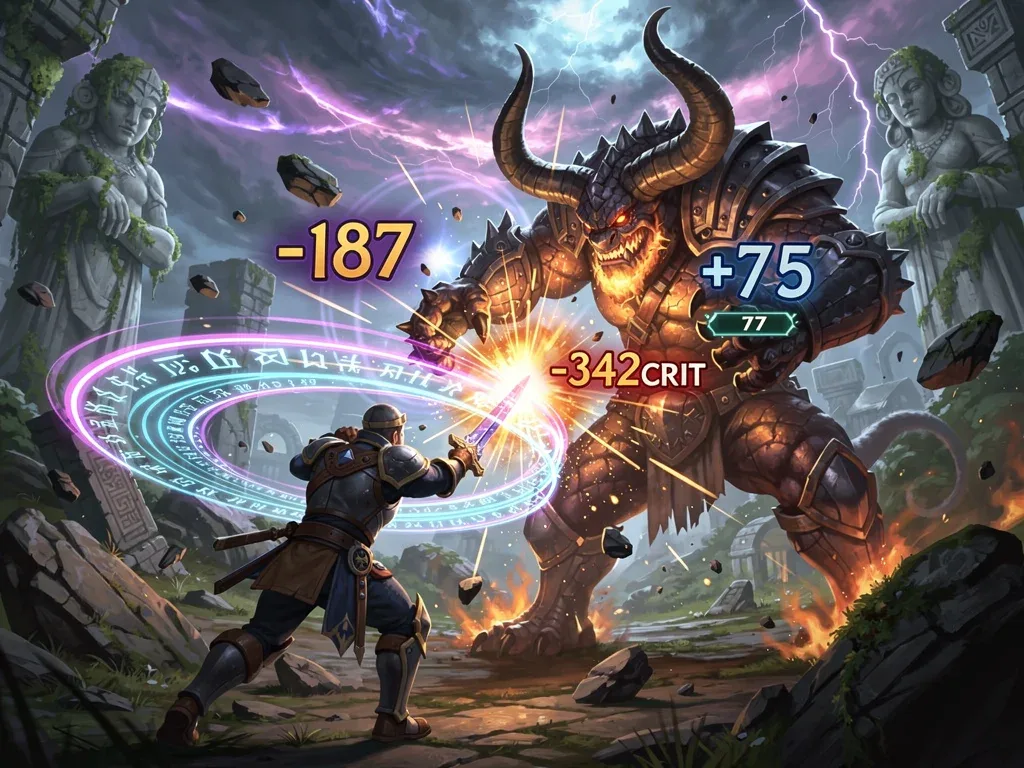
Mastering the combat system in RPGs like Mythic Realms 2026 requires a deep understanding of damage calculation, which involves intricate formulas blending character stats, gear, and environmental factors to determine offensive and defensive outcomes.
For any avid player of role-playing games, truly understanding the underlying mechanics of combat is key to success. This deep dive into Understanding Damage Calculation in RPGs: A 2026 Deep Dive into “Mythic Realms” Combat Formulas will demystify the numbers behind every swing, spell, and shield block, giving you the edge you need.
The Foundation of Damage: Core Attributes and Base Values
Every journey into an RPG’s combat system begins with its foundational elements: core attributes and base damage values. These are the building blocks upon which all subsequent calculations are made, influencing everything from a basic attack’s potency to a complex spell’s destructive force.
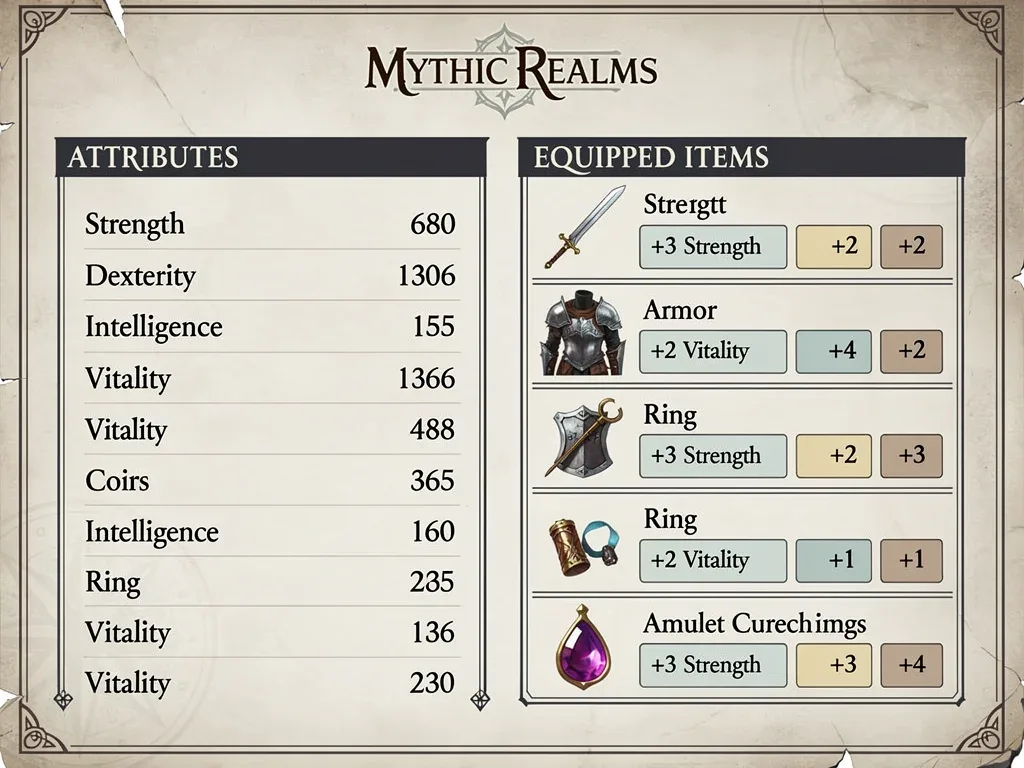
In “Mythic Realms,” like many modern RPGs, your character’s primary statistics—Strength, Dexterity, Intelligence, and Vitality—play a crucial role. Strength often dictates physical attack power, Dexterity might influence ranged damage and evasion, Intelligence powers magical abilities, and Vitality impacts health and sometimes defense. Understanding how each attribute scales and contributes to your base damage is the first step in optimizing your build. Different classes will prioritize different attributes, leading to distinct playstyles and damage outputs.
Primary Attribute Scaling
The scaling of primary attributes is not always linear. Developers often implement diminishing returns or breakpoints that make certain attribute investments more efficient than others. For instance, the first 50 points in Strength might grant a significant damage bonus per point, while points beyond 100 offer less substantial increases. This design encourages players to diversify their stats or to carefully consider the trade-offs of hyper-specialization.
- Strength: Boosts melee weapon damage and physical ability scaling.
- Dexterity: Enhances ranged weapon damage, critical hit chance, and evasion.
- Intelligence: Increases magical spell damage, healing potency, and mana pools.
- Vitality: Primarily affects maximum health and often contributes to physical defense.
Base damage, on the other hand, is usually derived from the weapon or ability itself. A sword might have a base damage range of 10-15, while a fireball spell could have a base damage of 20. These base values are then modified by your attributes and other factors. Without a solid grasp of these initial figures, predicting the outcome of combat becomes a guessing game. “Mythic Realms” provides tooltips that often detail these base values, making it easier for players to compare gear and abilities.
Ultimately, a deep understanding of how core attributes and base values interlink is essential for any player looking to master “Mythic Realms.” It’s the bedrock upon which all advanced damage calculations are built, and neglecting it can lead to inefficient character progression and suboptimal combat performance. Players should experiment with different attribute distributions to find what best suits their playstyle and chosen class.
Weapon and Gear Modifiers: Amplifying Your Offense
Once you understand your character’s base attributes, the next layer of complexity in RPG damage calculation comes from weapon and gear modifiers. These are the enchantments, special abilities, and statistical bonuses provided by the equipment your character wields and wears. In “Mythic Realms,” these modifiers can dramatically alter your damage output, turning a modest attack into a devastating blow.
Weapons often come with inherent damage bonuses, elemental properties, or unique procs that trigger additional effects. For example, a legendary sword might not only have a high base damage but also grant a percentage increase to critical hit damage or imbue attacks with fire damage. Armor pieces, while primarily defensive, can also offer offensive stats like increased attack speed, bonus critical strike chance, or even direct damage additions to certain abilities. The synergy between different gear pieces is crucial; a well-chosen set can unlock powerful bonuses that significantly outperform individually strong items.
Understanding Damage Types and Resistances
“Mythic Realms” incorporates various damage types (e.g., physical, fire, ice, lightning, arcane, holy, shadow) and corresponding resistances. A weapon or spell dealing fire damage will be more effective against enemies vulnerable to fire and less effective against those with high fire resistance. Gear modifiers often include bonuses to specific damage types, allowing players to specialize against certain enemy factions or boss encounters. This adds a strategic layer to equipment choices, as optimizing for a particular encounter might require swapping out gear.
- Elemental Damage: Fire, Ice, Lightning, Arcane, Holy, Shadow.
- Physical Damage: Slashing, Piercing, Bludgeoning.
- Resistance Penetration: Reduces enemy resistances, increasing effective damage.
- Damage Conversion: Converts one damage type to another (e.g., physical to fire).
Furthermore, gear can introduce unique mechanics like ‘damage over time’ (DoT) effects, ‘lifesteal,’ or ‘on-hit’ effects. A DoT effect might apply a bleed that deals damage every second for a duration, while lifesteal converts a portion of your damage dealt into health recovery. On-hit effects can range from stunning enemies to applying debuffs. These additional effects are not always reflected in the raw damage numbers but contribute significantly to overall combat effectiveness and survivability. Analyzing how these modifiers interact with your attributes and abilities is paramount for constructing a truly optimized character build.
Critical Hits and Fumbles: The Role of Randomness
Beyond the predictable increases from attributes and gear, randomness plays a vital role in RPG damage calculation through critical hits and fumbles. These elements introduce an exciting, unpredictable variable into combat, making each encounter feel dynamic and less like a static mathematical equation. Understanding how these mechanics work in “Mythic Realms” can help players mitigate risks and maximize their lucky streaks.
A critical hit, often referred to as a ‘crit,’ occurs when an attack deals significantly more damage than usual. This is typically determined by a character’s critical hit chance stat, which is a percentage indicating the likelihood of landing a crit. When a critical hit occurs, the damage dealt is multiplied by a ‘critical damage multiplier,’ which can also be increased through gear and abilities. For example, if your critical hit chance is 25% and your critical damage multiplier is 200%, every fourth attack, on average, would deal double damage. This burst potential is crucial for quickly dispatching tough enemies or turning the tide of a difficult battle.
Factors Influencing Criticals
Several factors can influence your critical hit chance and damage. Dexterity, certain weapon types (like daggers or bows), specific enchantments, and temporary buffs can all contribute. Some classes, particularly rogues and assassins, often have skills that inherently boost their critical hit capabilities, making them highly reliant on these bursts of damage. Conversely, enemies can also have their own critical hit chances, making defense against them equally important.
- Critical Hit Chance: Probability of landing a critical strike.
- Critical Damage Multiplier: How much extra damage a critical hit deals.
- Precision Stats: Often linked to increased critical chance for specific abilities.
- Fumble Chance: Probability of a failed attack, sometimes resulting in self-damage or debuffs.
Fumbles, while less common in many modern RPGs, can also introduce negative randomness. A fumble might cause your character to miss an attack entirely, drop their weapon, or even suffer a small amount of self-inflicted damage. “Mythic Realms” employs a simplified fumble system where extremely low attack rolls might result in a temporary debuff on the attacker or a missed turn, adding a layer of risk to aggressive play. While critical hits are generally desirable, fumbles serve as a counterbalancing mechanic, preventing combat from becoming too predictable and encouraging players to consider their accuracy stats.
Ultimately, the interplay of critical hits and fumbles adds a layer of excitement and strategic depth to “Mythic Realms” combat. While players cannot control individual rolls, they can influence the probabilities through character building and gear choices, leaning into the burst potential of crits or minimizing the risk of fumbles.
Defensive Mechanics: Mitigating Incoming Damage
While offensive calculations often grab the spotlight, understanding defensive mechanics is equally vital for survival and strategic combat in “Mythic Realms.” Mitigating incoming damage is not just about having a large health pool; it involves a complex interplay of armor, resistances, evasion, and damage reduction abilities. A well-rounded character knows how to dish out damage while also shrugging off enemy attacks.
Armor is typically the primary form of physical damage reduction. In “Mythic Realms,” armor rating directly reduces the percentage of physical damage taken. The more armor you have, the less physical damage you suffer. However, armor often has diminishing returns, meaning that beyond a certain point, stacking more armor provides less effective damage reduction per point. This encourages players to look for other defensive stats once a comfortable armor threshold is met. Different armor types (light, medium, heavy) offer varying amounts of protection and usually come with trade-offs in mobility or spellcasting effectiveness.
Resistances and Evasion
Resistances function similarly to armor but apply to specific elemental or magical damage types. If an enemy deals fire damage, having high fire resistance will significantly reduce the damage taken. Balancing resistances across different elements is crucial, especially when facing diverse enemy types. Evasion, on the other hand, provides a chance to completely avoid an incoming attack. Unlike damage reduction, which reduces the amount, evasion prevents the damage entirely. Characters focusing on agility often invest heavily in evasion to become difficult targets, though highly accurate enemies or spells that cannot be evaded can bypass this defense.
- Armor Rating: Reduces incoming physical damage by a percentage.
- Elemental Resistances: Reduces specific elemental damage types (Fire, Ice, etc.).
- Magic Resistance: Reduces incoming magical spell damage.
- Evasion/Dodge Chance: Probability of completely avoiding an attack.
Beyond static stats, many classes in “Mythic Realms” possess active defensive abilities. These can range from temporary shields that absorb a fixed amount of damage, buffs that increase armor or resistances for a duration, or crowd control abilities that prevent enemies from attacking. Positioning also plays a critical role; avoiding frontal attacks from certain enemies or utilizing environmental cover can significantly reduce the damage you take. Mastering these defensive layers allows players to survive challenging encounters, tank powerful bosses, and support their allies effectively.
Buffs, Debuffs, and Environmental Factors
The combat landscape in “Mythic Realms” is rarely static; it’s a dynamic interplay of buffs, debuffs, and environmental factors that can swing the tide of battle. Understanding how these temporary conditions and external influences impact RPG damage calculation is crucial for any player aiming for mastery. These elements add layers of strategy, making each decision in combat potentially game-changing.
Buffs are beneficial effects applied to your character or allies, typically increasing offensive or defensive capabilities. These can come from spells, potions, character abilities, or even certain gear sets. Examples include temporary increases to attack power, critical hit chance, damage reduction, or regeneration. Properly managing and timing your buffs can lead to significant spikes in damage output or provide the necessary survivability to overcome a difficult phase of an encounter. For instance, a well-timed damage buff before using a powerful ultimate ability can result in massive damage numbers, clearing threats quickly.
The Impact of Debuffs
Conversely, debuffs are detrimental effects applied to enemies or, occasionally, your own character. These can reduce an enemy’s armor, resistances, attack power, or even inflict damage over time. Applying the right debuffs to high-priority targets can make them much easier to defeat, effectively acting as a damage multiplier for your entire party. Slows, roots, and stuns are also forms of debuffs that, while not directly affecting damage numbers, can prevent enemies from attacking, indirectly reducing incoming damage and allowing your team to freely deal damage.
- Damage Buffs: Increase outgoing damage (e.g., Attack Power Up, Damage Multiplier).
- Defensive Buffs: Increase survivability (e.g., Armor Up, Resistance Boost).
- Damage Debuffs: Reduce enemy defenses or increase damage taken (e.g., Armor Break, Vulnerability).
- Crowd Control Debuffs: Impair enemy actions (e.g., Stun, Root, Silence).
Environmental factors in “Mythic Realms” can also significantly alter combat. Terrain can provide cover, granting defensive bonuses, or impede movement. Weather conditions might empower certain elemental attacks while weakening others. For example, fighting in a blizzard could boost ice damage but reduce fire damage. Some areas might have environmental hazards like lava pools or poison gas that deal damage over time to anyone standing in them, or beneficial elements like healing springs. Savvy players learn to utilize these environmental elements to their advantage, positioning themselves optimally to maximize their damage and minimize incoming threats. Ignoring these dynamic factors can lead to unforeseen challenges and suboptimal combat performance, highlighting the importance of situational awareness.
Advanced Combat Formulas: Peeking Behind the Curtain
For those truly dedicated to mastering “Mythic Realms,” a deeper understanding of advanced combat formulas is indispensable. While many players can succeed with a general grasp, optimizing builds and strategies for endgame content often requires peeking behind the curtain at the exact mathematical equations that govern RPG damage calculation. Developers design these formulas to create specific combat dynamics, and knowing them allows for truly informed decision-making.
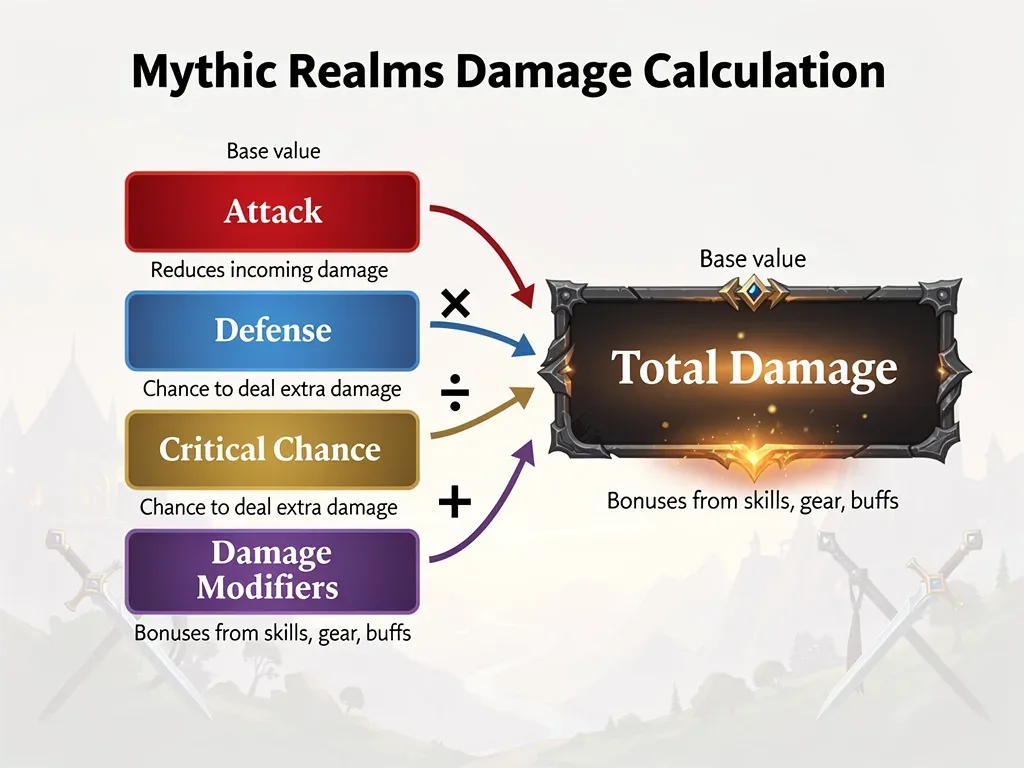
Most RPG damage formulas follow a general structure: `((Base Damage + Attribute Scaling) * Weapon/Gear Multipliers * Buffs) / (Enemy Defenses / Debuffs) * Randomness (Crit/Fumble)`. However, the specifics of each variable and how they interact can vary wildly. For instance, some games calculate armor as a flat reduction, while others use a percentage-based formula that scales with the attacker’s level. “Mythic Realms” employs a hybrid system, where armor reduces damage by a base percentage, but higher armor values also provide a flat reduction against lower-level attacks, making it more effective in early game progression.
Understanding Damage Curves and Breakpoints
One critical aspect of advanced formulas is understanding damage curves and breakpoints. A damage curve illustrates how your damage output scales with attribute investment or gear quality. Breakpoints are specific thresholds where investing in a particular stat yields a disproportionately higher return. For example, reaching a certain attack speed breakpoint might allow you to get an extra attack within a crucial ability window, significantly boosting your damage per second (DPS). Identifying these breakpoints is key for min-maxing your character. This often involves community-driven data analysis and simulation tools, as in-game tooltips may not always reveal these granular details.
- Multiplicative vs. Additive Bonuses: Understanding how different bonuses combine (multiplicative bonuses are generally more powerful).
- Soft Caps and Hard Caps: Limits on how effective certain stats can be.
- Damage Per Second (DPS) Optimization: Calculating the most efficient way to maximize damage output over time.
- Effective Health (EHP) Calculation: Determining how much damage your character can truly withstand.
Furthermore, “Mythic Realms” incorporates complex interactions between different types of damage and defenses. For example, ‘Resistance Penetration’ stats might not just reduce an enemy’s resistance but could also convert a portion of your damage to ‘True Damage,’ which bypasses all defenses. Understanding these nuanced mechanics allows players to craft specialized builds that exploit enemy weaknesses or overcome challenging defensive encounters. Analyzing combat logs and using external calculators (often created by the community) can provide invaluable insights into the exact numbers, allowing players to fine-tune their gear and skill allocations for maximum efficiency in the demanding endgame content of 2026.
Optimizing Your Build: Strategy and Application
With a comprehensive understanding of RPG damage calculation in “Mythic Realms,” the final step is to apply this knowledge to optimize your character build and combat strategy. This isn’t just about blindly following a guide; it’s about making informed decisions tailored to your playstyle, the content you’re tackling, and the ever-evolving meta of the game. Optimization is a continuous process of learning, adapting, and refining.
The first aspect of optimization involves careful character planning. From the moment you create your character, consider the class fantasy and how its core attributes align with your desired damage profile. Do you want to be a burst damage dealer, a sustained DPS machine, or a tank that can still contribute meaningfully to damage? Allocate your attribute points strategically, prioritizing those that offer the best returns for your chosen abilities and weapon types. Don’t be afraid to respec if the game allows it, especially as you gain more experience and unlock new gear options. Early game optimization might focus on raw power, while endgame often requires a balance of offense, defense, and utility.
Gear Selection and Synergy
Gear selection is paramount. It’s not enough to simply equip items with the highest item level; you must analyze the modifiers they provide and how they synergize with your current build. Are you aiming for a critical hit build? Prioritize gear with critical chance and critical damage. Are you a spellcaster? Look for items that boost intelligence, spell power, and mana regeneration. Furthermore, consider set bonuses that often provide powerful effects when multiple pieces from the same set are equipped. These bonuses can sometimes outweigh the individual stats of disparate, higher-tier items. Regularly review new gear drops and compare them against your current setup, using the damage calculation knowledge to predict the actual impact of an upgrade.
- Stat Prioritization: Focus on attributes and modifiers that directly enhance your primary damage source.
- Set Bonuses: Evaluate the power of full or partial gear sets for synergistic effects.
- Enchantments and Gems: Customize gear with additional stats to fill gaps in your build.
- Ability Rotation: Practice efficient use of skills to maximize damage output within combat windows.
Finally, combat strategy and execution tie everything together. Knowing the formula is one thing; applying it effectively in the heat of battle is another. This includes understanding optimal ability rotations, knowing when to use defensive cooldowns, and adapting to enemy mechanics. For example, if a boss has a phase where it takes increased magical damage, a spellcaster should save their most potent abilities for that window. Similarly, knowing when to apply debuffs or utilize environmental advantages can significantly improve your overall combat effectiveness. Continuous practice, combined with a solid theoretical understanding of damage calculation, will pave your way to becoming a true “Mythic Realms” master.
| Key Aspect | Brief Description |
|---|---|
| Core Attributes | Strength, Dexterity, Intelligence, Vitality form the base of all damage and defense calculations. |
| Gear Modifiers | Weapons and armor provide bonuses, elemental damage, and unique effects that amplify combat effectiveness. |
| Criticals & Fumbles | Random elements introducing burst damage or negative outcomes, influenced by character stats. |
| Defensive Mechanics | Armor, resistances, and evasion are key to mitigating incoming damage and ensuring survivability. |
Frequently Asked Questions About Damage Calculation
How do core attributes like Strength and Intelligence affect damage in Mythic Realms?▼Core attributes directly scale with your damage. Strength typically boosts physical damage from melee weapons and skills, while Intelligence enhances magical damage from spells and abilities. Dexterity often improves ranged damage and critical hit chance. Each attribute’s specific scaling is detailed in item and skill tooltips, but generally, higher values mean higher base damage output.
What is the difference between additive and multiplicative damage bonuses?▼Additive bonuses are summed together before being applied to your base damage, while multiplicative bonuses are applied after all additive bonuses, often as a percentage increase to the total. Multiplicative bonuses usually provide a much greater impact on final damage output, making them highly sought after in endgame gear and builds for Mythic Realms.
How can I increase my critical hit chance and critical damage in Mythic Realms?▼Critical hit chance and critical damage can be increased through several means. Investing in Dexterity often boosts critical chance. Specific weapon types, gear enchantments, set bonuses, and temporary buffs from abilities or potions can also significantly enhance both stats. Optimizing these values is crucial for burst damage builds.
Are elemental resistances more important than armor for defense?▼The importance of elemental resistances versus armor depends on the enemies you face. Armor reduces physical damage, while resistances mitigate specific elemental or magical damage. A balanced approach is usually best, but if you’re facing a boss that primarily deals fire damage, stacking fire resistance would be more effective than maximizing armor. Adapt your defenses to the encounter.
How do buffs and debuffs factor into the overall damage calculation?▼Buffs enhance your outgoing damage or incoming healing, often acting as multiplicative modifiers applied to your total damage. Debuffs, conversely, weaken enemies, increasing the damage they take or reducing their defensive capabilities. Both are crucial for optimizing combat, as strategically applying them can significantly alter the outcome of battles by creating favorable damage windows.
Conclusion
Mastering Understanding Damage Calculation in RPGs: A 2026 Deep Dive into “Mythic Realms” Combat Formulas is not merely about memorizing numbers; it’s about developing an intuitive grasp of how every stat, item, and ability contributes to the larger combat ecosystem. From the foundational impact of core attributes and the amplifying effects of gear, to the unpredictable thrill of critical hits and the strategic necessity of defensive mechanics, every element plays a crucial role. By delving into the advanced formulas and understanding the nuances of buffs, debuffs, and environmental factors, players can transform their gameplay from guesswork to calculated mastery. This comprehensive understanding empowers you to craft optimized builds, adapt to any challenge, and truly excel in the rich and complex world of “Mythic Realms.”