5G’s Impact on US Mobile Esports: 2026 Market Analysis
Advertisements
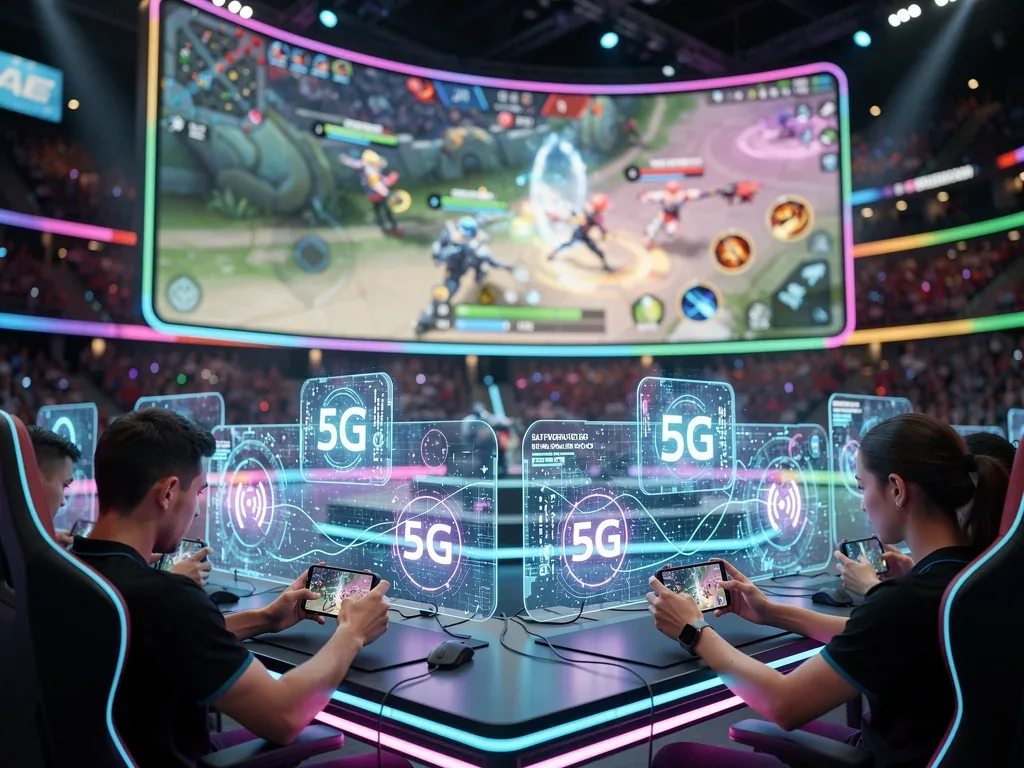
The transformative power of 5G is fundamentally revolutionizing mobile esports in the US, enabling a new era of competitive gaming with enhanced performance and accessibility, driving significant market expansion by 2026.
The gaming world is in a constant state of evolution, and few developments have promised to shake it up as much as 5G technology. Specifically, the impact of 5G on mobile esports in the US: a 2026 market analysis and future projections reveals a landscape undergoing rapid and profound transformation. This isn’t just about faster downloads; it’s about fundamentally altering how competitive mobile gaming is played, experienced, and consumed across the United States. Join us as we delve into the intricate details of this technological shift and what it means for players, publishers, and the entire mobile esports ecosystem.
The Dawn of a New Era: 5G’s Foundational Role in Mobile Esports
The introduction and widespread adoption of 5G technology have ushered in a new era for mobile esports, particularly within the United States. This isn’t merely an incremental upgrade; it’s a foundational shift that addresses many of the inherent limitations previously faced by mobile competitive gaming. The promise of ultra-low latency, significantly higher bandwidth, and more reliable connections is reshaping player expectations and opening doors for innovative game designs and tournament formats.
Previously, mobile gamers often contended with inconsistent network performance, which could be a critical disadvantage in fast-paced competitive titles. Lags, disconnections, and slow response times were common frustrations that hindered the professionalization of mobile esports. 5G directly tackles these issues, creating a more level playing field and allowing skill to be the primary determinant of victory, rather than network stability.
Redefining Connectivity and Performance
5G’s core benefits translate directly into a superior mobile esports experience. The enhanced speeds mean quicker data transfer, reducing the time it takes for game commands to register and for visual information to update on screen. This responsiveness is crucial in games where milliseconds can dictate the outcome of a match.
- Ultra-Low Latency: Minimizes delay between player input and game response, crucial for competitive play.
- Higher Bandwidth: Supports more complex game data and higher fidelity graphics without performance drops.
- Increased Reliability: Reduces dropped connections and ensures a consistent gaming experience, even in crowded areas.
- Edge Computing Integration: Potential for game processing closer to the user, further cutting latency.
Beyond individual player experience, 5G also empowers tournament organizers and broadcasters. High-quality streaming, multiple camera angles, and real-time data overlays become more feasible, enhancing the spectator experience and attracting larger audiences. The ability to host large-scale events with numerous players and spectators all connected to high-speed networks without congestion issues is a game-changer for the logistics of mobile esports.
In essence, 5G is not just improving existing mobile esports; it’s creating the infrastructure for entirely new possibilities. From casual players enjoying smoother gameplay to professional teams competing for significant prize pools, the technological backbone provided by 5G is indispensable for the continued growth and legitimization of mobile esports in the US market.
Market Dynamics: A 2026 Snapshot of US Mobile Esports Growth
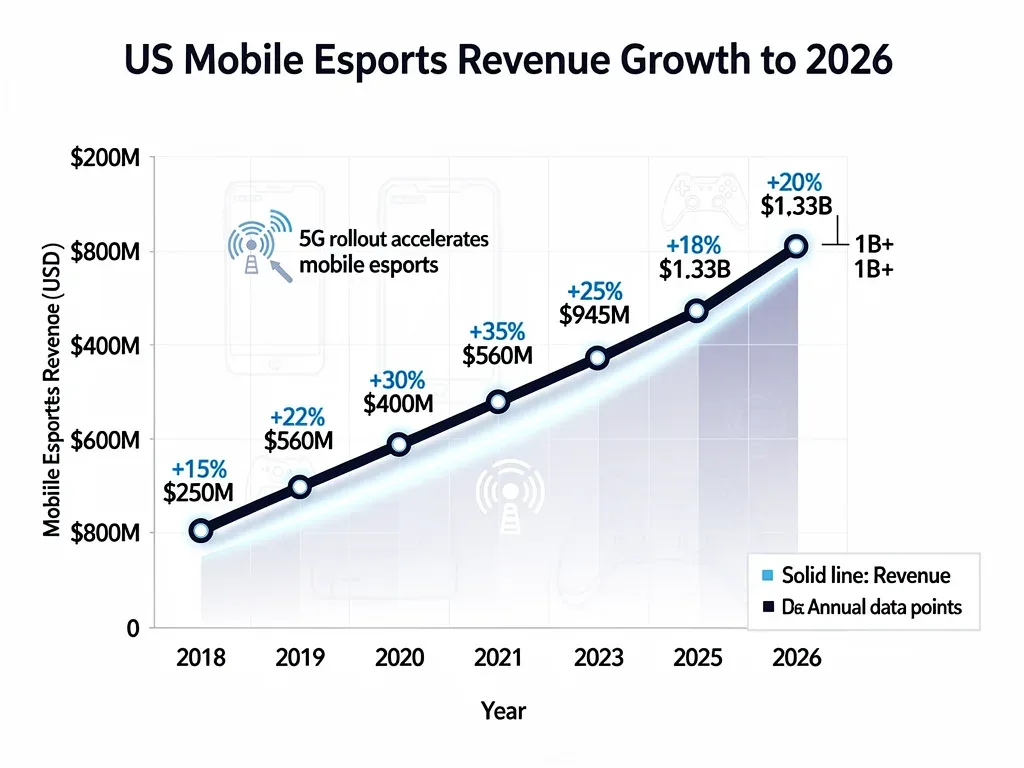
By 2026, the US mobile esports market is projected to be a powerhouse, with 5G acting as a primary catalyst for its expansion. The convergence of increasing smartphone penetration, a burgeoning interest in competitive gaming, and the robust infrastructure provided by 5G networks paints a picture of significant growth. This growth isn’t just in player numbers but also in revenue streams, sponsorship deals, and overall ecosystem maturity.
Current trends indicate a rapid acceleration in mobile game development specifically tailored for competitive play. Publishers are investing heavily in optimizing titles for 5G environments, ensuring seamless performance and engaging experiences. This strategic pivot by developers is crucial for sustaining the market’s upward trajectory, offering players games that fully leverage the capabilities of next-gen networks.
Revenue Projections and Key Growth Drivers
Financial forecasts for the US mobile esports market by 2026 are exceptionally optimistic. Analysts predict substantial increases in revenue, driven by several key factors. These include a rise in in-game purchases, significant growth in advertising and sponsorship revenues, and expanding media rights deals for broadcasting tournaments. The accessibility of mobile gaming means a larger potential audience for these revenue streams.
- Increased Player Engagement: Smoother gameplay due to 5G leads to longer play sessions and higher retention rates.
- Sponsorship Boom: Brands are increasingly recognizing the value of reaching the diverse and engaged mobile esports audience.
- Media Rights Expansion: Demand for exclusive broadcasting rights for major mobile esports tournaments will escalate.
- In-Game Monetization: Enhanced game experiences encourage more spending on cosmetic items and battle passes.
Furthermore, the demographics of mobile esports players are broadening. While traditionally dominated by younger audiences, the ease of access and diverse game genres are attracting a wider age range. This expanded player base contributes to the overall market size and offers more opportunities for various monetization strategies. The casual gamer can easily transition into competitive play, blurring the lines between traditional gaming and esports.
The regulatory environment and technological advancements beyond 5G, such as improved mobile hardware and cloud gaming integration, will also play supportive roles. However, 5G remains the linchpin, providing the essential low-latency, high-bandwidth foundation upon which these other elements can truly thrive. The market’s health is intrinsically linked to the continued rollout and optimization of 5G infrastructure nationwide, particularly in urban centers and emerging competitive hubs.
Enhanced Player Experience: The Core of 5G’s Contribution
At the heart of 5G’s transformative effect on mobile esports lies the significantly enhanced player experience. This goes beyond mere technical specifications; it translates into a tangible difference in how players interact with games and compete against others. The seamless, lag-free environment fostered by 5G allows for a purer form of competition, where individual skill and strategic thinking are paramount, unhindered by network inconsistencies.
Consider the precise timing required in a MOBA (Multiplayer Online Battle Arena) or the rapid reflexes demanded in a battle royale game. Even a fraction of a second of latency can mean the difference between a game-winning play and a frustrating defeat. 5G drastically reduces this latency, making competitive mobile gaming feel as responsive and fluid as its PC or console counterparts, thereby elevating the overall quality of play.
Impact on Gameplay Mechanics and Accessibility
The improved connectivity also allows game developers to innovate with gameplay mechanics that were previously too demanding for mobile networks. This includes more players in a single match, richer graphical environments, and more complex real-time physics calculations. Such advancements can lead to entirely new genres or significantly evolve existing ones, keeping the mobile esports scene fresh and engaging.
- Richer Graphics: Higher bandwidth supports more detailed textures and complex visual effects.
- Complex Game Worlds: Developers can create larger maps and more dynamic environments without performance bottlenecks.
- Innovative Mechanics: New game modes and features requiring real-time data processing become viable.
- Wider Accessibility: Reliable connections in diverse locations make competitive gaming accessible to more players, regardless of their physical location.
Moreover, 5G enhances the accessibility of mobile esports. Players are no longer tethered to Wi-Fi hotspots for a stable connection. They can compete effectively from almost anywhere with 5G coverage, democratizing access to competitive gaming. This flexibility is particularly important for aspiring professionals who may not have dedicated gaming setups but possess the talent and drive to compete at a high level. The ability to practice and compete on the go removes significant barriers to entry.
The psychological impact on players is also noteworthy. Knowing that their connection is robust and reliable frees them to focus entirely on the game, reducing stress and allowing for better performance under pressure. This confidence in the underlying technology is a critical, yet often underestimated, component of a truly enhanced player experience in competitive environments.
The Evolution of Tournaments and Spectator Experience
The influence of 5G extends far beyond individual player performance, fundamentally reshaping how mobile esports tournaments are organized, executed, and consumed by spectators. The infrastructure improvements enable a more professionalized and engaging viewing experience, drawing parallels with established PC and console esports events. This evolution is critical for attracting larger audiences and securing more lucrative sponsorships.
Organizers can now plan for events with confidence, knowing that the underlying network can handle the demands of multiple high-definition streams, real-time data feeds, and numerous connected devices. This reliability minimizes technical glitches that can detract from the viewing experience, ensuring that the focus remains squarely on the competitive action.
Professionalizing Broadcasts and Fan Engagement
5G makes high-quality, low-latency broadcasting a reality for mobile esports. This means viewers can enjoy crystal-clear streams, multiple camera angles, and instant replays without buffering or significant delays. The ability to deliver a premium viewing experience is paramount for attracting and retaining a global audience.
- High-Definition Streaming: Flawless delivery of 4K content to viewers, enhancing visual fidelity.
- Real-Time Analytics: Instantaneous display of player statistics, game data, and strategic insights for commentators.
- Interactive Viewing: Potential for fan-driven camera angles or in-app voting during live events.
- Augmented Reality Overlays: Enhanced broadcast elements that leverage AR to provide immersive data visualization.
Furthermore, 5G facilitates more dynamic fan engagement. Imagine interactive fan zones at live events where attendees can participate in mini-tournaments on 5G-enabled devices, or augmented reality experiences that bring game characters to life in the physical space. These innovations create a more immersive and memorable experience for fans, building stronger communities around mobile esports titles.
The increased reliability also impacts remote production capabilities. Broadcasters can more easily integrate remote commentators, analysts, and production teams, reducing logistical complexities and costs. This flexibility can lead to more frequent and diverse tournament coverage, further expanding the reach of mobile esports. The overall effect is a more polished, professional, and accessible product for both participants and viewers.
Challenges and Opportunities: Navigating the 2026 Landscape
While the outlook for 5G’s impact on mobile esports in the US is overwhelmingly positive, the path to 2026 is not without its challenges. The widespread deployment of 5G, particularly millimeter-wave (mmWave) technology that offers the highest speeds, is still an ongoing process. Coverage gaps and inconsistencies can still hinder the seamless experience promised by the technology, especially in rural areas or dense urban environments.
Additionally, the rapid pace of technological change means that game developers must constantly innovate to leverage 5G’s capabilities fully. Keeping up with hardware advancements and network evolution while delivering compelling gameplay experiences will be a continuous challenge. Balancing graphical fidelity with optimization for a wide range of mobile devices remains a crucial consideration.
Overcoming Hurdles and Maximizing Potential
Addressing the remaining infrastructure gaps is paramount. Investment in expanding 5G coverage and improving network density, particularly in areas identified as potential esports hubs, will be critical. This requires collaboration between network providers, local governments, and esports organizations to strategically prioritize deployment.
- Infrastructure Expansion: Continued investment in nationwide 5G rollout, especially mmWave.
- Device Compatibility: Ensuring a broad range of mobile devices can fully utilize 5G’s capabilities for gaming.
- Developer Adaptation: Game studios must design titles that effectively leverage 5G without alienating users on older networks.
- Competitive Integrity: Maintaining fair play and preventing cheating in a technologically advanced environment.
From an opportunity perspective, the future is incredibly bright. 5G opens doors for new business models, such as subscription-based cloud gaming services optimized for competitive play, or localized esports leagues that thrive on hyper-low latency connections within specific regions. The ability to host pop-up tournaments anywhere with strong 5G connectivity creates unprecedented flexibility for grassroots esports initiatives.
Furthermore, the convergence of 5G with other emerging technologies, such as artificial intelligence and augmented reality, promises to create even more immersive and dynamic esports experiences. AI could be used for advanced matchmaking or real-time coaching, while AR could enhance spectator views or even integrate into gameplay. The challenges are significant, but the opportunities for innovation and growth are even greater, positioning the US mobile esports market for an exciting trajectory towards 2026 and beyond.
Future Projections: Beyond 2026 and the Metaverse Integration
Looking beyond the immediate horizon of 2026, the trajectory of mobile esports, heavily influenced by 5G, points towards even more revolutionary developments. The continued maturation of 5G infrastructure, coupled with advancements in other technological domains, is set to pave the way for highly immersive and integrated competitive gaming experiences. One of the most exciting, albeit nascent, areas of exploration is the integration of mobile esports within the nascent metaverse.
The metaverse, envisioned as a persistent, interconnected virtual world, offers a compelling future for competitive gaming. Mobile devices, powered by 5G, could serve as primary gateways to these virtual environments, allowing players to not only compete in traditional esports titles but also to engage in new forms of competitive experiences within a broader digital universe. This convergence could redefine what it means to participate in and spectate esports.
The Role of AR/VR and Cloud Gaming in Future Mobile Esports
The enhanced bandwidth and low latency of 5G are critical enablers for the widespread adoption of augmented reality (AR) and virtual reality (VR) in mobile esports. While VR currently requires more powerful dedicated hardware, mobile AR is already making strides, and 5G can significantly improve its performance and immersion.
- Mobile AR Esports: New competitive game formats leveraging AR overlays in real-world environments.
- Cloud-Native Esports: Games designed from the ground up for cloud streaming, offering console-quality graphics on mobile.
- Metaverse Integration: Competitive events and social hubs hosted within persistent virtual worlds accessible via mobile.
- Hyper-Personalized Experiences: AI-driven customization of game environments and competitive challenges based on player data.
Cloud gaming, already gaining traction, will become even more seamless with ubiquitous 5G. This will allow mobile players to access graphically intensive esports titles that traditionally required high-end PCs or consoles, directly on their smartphones. The processing power resides in the cloud, with 5G providing the ultra-fast, low-latency connection needed for a responsive gaming experience. This further democratizes access to high-fidelity competitive gaming.
The metaverse offers the potential for competitive social spaces where players can interact, train, and compete in ways that blur the lines between virtual and physical. Imagine watching an esports match with friends in a virtual stadium, or participating in a competitive challenge that blends real-world elements with digital overlays via AR. 5G is the essential conduit that will make these ambitious visions a reality, solidifying mobile esports as a central pillar of the future gaming landscape.
Investment and Infrastructure: Fueling the Mobile Esports Boom
The sustained growth and future potential of mobile esports in the US are heavily reliant on continuous investment and the robust development of underlying infrastructure. Beyond the initial rollout of 5G, there’s a need for ongoing capital injection into network optimization, specialized gaming infrastructure, and the development of esports-specific venues and ecosystems. This financial commitment from various stakeholders is crucial for translating potential into palpable market success.
Telecommunications companies are at the forefront, investing billions in expanding 5G coverage and capacity. However, their efforts must be complemented by investments from game publishers, hardware manufacturers, and even government bodies that recognize the economic and cultural impact of the burgeoning esports industry. The creation of dedicated 5G lanes for gaming traffic, for example, could further optimize performance.
Strategic Partnerships and Technological Advancements
Strategic partnerships will play a pivotal role in fueling this boom. Collaborations between mobile carriers and game developers can lead to exclusive content, optimized gaming plans, and innovative marketing strategies. Similarly, partnerships between esports organizations and technology providers can ensure that competitive events are equipped with the most advanced 5G-enabled solutions.
- Carrier-Publisher Collaborations: Joint ventures for optimized game versions or exclusive content.
- Dedicated 5G Slices: Network prioritization for esports traffic to guarantee ultra-low latency.
- Localized Infrastructure: Deployment of edge computing servers near major esports venues and player hubs.
- Hardware Innovation: Development of mobile devices specifically designed for competitive 5G gaming, with advanced cooling and displays.
Technological advancements in mobile device hardware will also contribute significantly. Phones with more powerful processors, advanced cooling systems, and higher refresh rate displays will complement 5G’s capabilities, providing an unparalleled mobile gaming experience. These hardware innovations, driven by consumer demand for superior mobile esports performance, will create a virtuous cycle of improvement.
Furthermore, the investment extends to human capital. Training programs for esports professionals, coaches, and technical staff are essential for building a sustainable industry. Universities and educational institutions are beginning to offer esports-related degrees, preparing a skilled workforce for the future. This holistic approach to investment and infrastructure development ensures that the US mobile esports market is not just a fleeting trend but a deeply rooted and expanding sector of the entertainment industry.
| Key Impact Area | Brief Description |
|---|---|
| Player Experience | Ultra-low latency and high bandwidth enhance gameplay, making competitive mobile gaming smoother and more responsive. |
| Market Growth | 5G fuels significant revenue growth in the US mobile esports market by 2026, driven by increased engagement and sponsorships. |
| Tournament Evolution | Enables professional-grade broadcasts and interactive spectator experiences, attracting larger audiences. |
| Future Innovations | Paves the way for AR/VR integration, cloud-native esports, and metaverse experiences beyond 2026. |
Frequently Asked Questions about 5G and Mobile Esports
How does 5G specifically improve mobile esports performance?▼5G significantly enhances mobile esports performance through ultra-low latency, which minimizes input lag, and higher bandwidth, allowing for faster data transfer and more stable connections. This translates to smoother gameplay, quicker reactions, and a more reliable competitive environment for players.
What market growth is expected for US mobile esports by 2026 due to 5G?▼By 2026, the US mobile esports market is expected to see substantial growth, primarily driven by 5G adoption. This includes significant increases in revenue from in-game purchases, robust sponsorship deals, and expanding media rights, as 5G makes competitive mobile gaming more accessible and engaging.
Will 5G make mobile esports comparable to PC or console esports?▼5G brings mobile esports much closer to the performance levels of PC and console esports. The reduced latency and increased stability allow for more complex game mechanics and higher fidelity graphics, narrowing the experiential gap and fostering a more professional competitive environment on mobile devices.
What challenges does 5G adoption face in the mobile esports scene?▼Despite its benefits, 5G adoption faces challenges such as uneven network coverage across the US, requiring continued infrastructure investment. Game developers also need to optimize titles for 5G while ensuring compatibility with a wide range of devices, and maintaining competitive integrity remains crucial.
How might mobile esports evolve beyond 2026 with 5G and other tech?▼Beyond 2026, mobile esports could integrate deeply with the metaverse, offering immersive competitive experiences. 5G will enable widespread mobile AR/VR gaming and cloud-native esports, bringing console-quality titles to smartphones and fostering entirely new competitive formats within persistent virtual worlds.
Conclusion
The journey of mobile esports in the US, profoundly shaped by the advent of 5G technology, is set to reach unprecedented heights by 2026 and beyond. From revolutionizing the core player experience with ultra-low latency and enhanced bandwidth to transforming tournament broadcasts and spectator engagement, 5G is the undeniable backbone of this burgeoning industry. While challenges such as infrastructure expansion and continuous innovation persist, the opportunities for growth, new business models, and immersive competitive experiences are vast. As investment flows into network optimization, hardware advancements, and strategic partnerships, mobile esports is poised to become an even more dominant and integrated part of the global gaming and entertainment landscape, with 5G leading the charge into a truly connected and competitive future.