PSVR 3 Development: Sony Patent Hints at 2026/2027 Launch
Advertisements
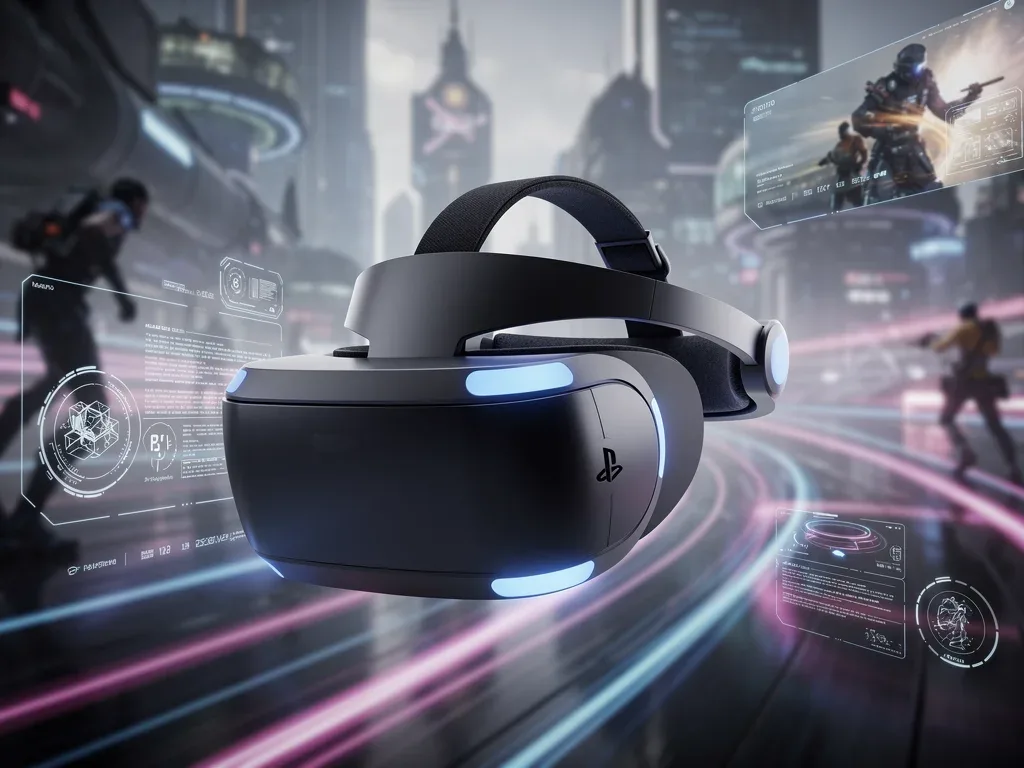
Sony’s recent patent filings strongly indicate active PSVR 3 development, pointing towards an anticipated launch in 2026 or 2027, promising enhanced immersive gaming experiences.
A recent patent filing by Sony has sent ripples of excitement through the gaming community, strongly suggesting that PSVR 3 development is actively underway, with a potential launch window targeting 2026 or 2027. This revelation comes as PlayStation VR users eagerly await the next leap in immersive virtual reality technology.
The evolving landscape of virtual reality gaming
Virtual reality gaming has come a long way since its early, experimental stages, transforming from a niche technology into a significant segment of the entertainment industry. The advancements in hardware, software, and content have steadily propelled VR into the mainstream, offering experiences that were once confined to science fiction. Sony, with its PlayStation VR line, has been a pivotal player in this evolution, bringing high-quality VR to console gamers worldwide.
The journey began with the original PSVR, which, despite its technical limitations compared to PC-based systems, offered an accessible entry point into VR for millions of PlayStation 4 owners. Its success laid the groundwork for PSVR 2, which arrived with significant upgrades, including sharper displays, improved tracking, and haptic feedback. Now, the anticipation for PSVR 3 development signals Sony’s continued commitment to pushing the boundaries of immersive gaming.
Technological leaps driving VR innovation
The pace of technological innovation in VR is relentless. Each new generation of headsets brings with it breakthroughs in display technology, processing power, and user interaction. For the rumored PSVR 3, these advancements are expected to be even more profound, leveraging the capabilities of future PlayStation consoles to deliver unparalleled visual fidelity and responsiveness.
- High-resolution displays: Expect resolutions that significantly reduce the ‘screen door effect,’ offering crystal-clear visuals.
- Wider field of view: An expanded field of view will enhance immersion, making virtual worlds feel more natural and encompassing.
- Advanced eye tracking: Improved eye tracking can enable foveated rendering, optimizing graphical performance where the user is looking.
- Enhanced haptics and controllers: More nuanced haptic feedback and ergonomic controllers will deepen the sense of presence and interaction.
These technological improvements are not merely incremental; they represent a fundamental shift in how users will experience virtual worlds. The focus is on creating a seamless, intuitive, and deeply immersive experience that blurs the lines between the virtual and the real. The potential for PSVR 3 development to integrate these innovations is a key reason for the excitement surrounding Sony’s patent.
The industry is moving towards more integrated and comfortable VR solutions, and Sony’s patent filings often provide a window into their strategic direction. Understanding these trends helps contextualize the significance of any new PSVR 3 development. As VR technology matures, the emphasis shifts from simply making it work to making it truly transformative.
Decoding Sony’s patent filing for PSVR 3
Patent filings are often the first tangible indicators of a company’s future product development, offering a glimpse into their innovative pipeline. Sony’s recent patent, while not explicitly naming ‘PSVR 3,’ describes advancements that are highly pertinent to a next-generation virtual reality system. These filings are meticulously detailed, outlining specific technological improvements and conceptual designs that align with the trajectory of VR evolution.
The patent focuses on several key areas, including enhanced optical systems, improved tracking mechanisms, and novel approaches to comfort and ergonomics. These elements are crucial for any successful VR headset, and Sony’s attention to them underscores their commitment to refining the user experience.
Key innovations highlighted in the patent
One of the most intriguing aspects of the patent relates to its optical design. Traditional VR headsets often struggle with balancing field of view, resolution, and form factor. Sony’s filing suggests a novel approach to lens arrays and display placement that could significantly improve visual clarity and immersion without adding bulk. This is a critical step for long-term comfort and reducing motion sickness.
Another area of focus is the tracking system. While PSVR 2 introduced inside-out tracking, the patent hints at even more sophisticated methods, potentially incorporating external sensors in conjunction with internal cameras for ultra-precise movement detection. This hybrid approach could offer the best of both worlds, ensuring robust tracking even in challenging environments. The patent also delves into advanced haptic feedback within the headset itself, moving beyond controller-based vibrations to create a more direct and localized sense of touch within the virtual environment.
- Advanced optical system: Designed to offer a wider field of view and sharper images.
- Hybrid tracking solution: Combining internal and external sensors for superior accuracy.
- Integrated haptic feedback: Providing localized vibrations directly on the headset for deeper immersion.
- Improved comfort and weight distribution: Aiming for extended play sessions without discomfort.
These innovations, if successfully implemented in PSVR 3 development, would represent a substantial leap forward. They address some of the most common criticisms of current VR technology, such as limited FOV, occasional tracking glitches, and overall comfort during prolonged use. The patent serves as a strong indicator that Sony is not merely planning an incremental update but a significant overhaul of its VR offering.
Understanding the technical details within these patents is essential for grasping the potential of the next PlayStation VR system. It’s not just about higher numbers; it’s about fundamentally rethinking how users interact with and perceive virtual worlds. This deep dive into the patent’s specifics helps paint a clearer picture of what to expect from future PSVR 3 development.
The projected 2026/2027 launch window
The projected launch window of 2026 or 2027 for PSVR 3 development is a critical piece of information derived from the nature of patent filings and typical product development cycles in the tech industry. Developing a sophisticated piece of hardware like a VR headset, especially one intended to push technological boundaries, requires extensive research, prototyping, testing, and manufacturing preparation. This process rarely takes less than several years from initial concept to market release.
Given that PSVR 2 launched in early 2023, a 2026/2027 timeframe suggests a roughly 3-4 year gap between generations. This aligns with historical patterns for major hardware revisions in the console and peripheral markets, allowing sufficient time for significant technological advancements to mature and for the market to absorb the previous generation.
Factors influencing the release date
Several factors contribute to this projected timeline. Firstly, the maturity of the underlying technologies described in the patent. While the concepts may be patented, transforming them into reliable, mass-producible components takes time. Secondly, the development of the next-generation PlayStation console, which PSVR 3 will undoubtedly be designed to complement, plays a significant role. The two are likely being developed in tandem to ensure optimal performance and integration.
- Technological readiness: Ensuring new components are stable and scalable for mass production.
- Console synergy: Aligning the PSVR 3 launch with the next PlayStation console for seamless integration.
- Content pipeline: Giving developers ample time to create compelling games for the new hardware.
- Market conditions: Assessing the overall economic climate and consumer readiness for a new high-end VR device.
Furthermore, Sony will need to cultivate a robust library of launch titles that effectively showcase the new headset’s capabilities. Game development cycles are long, and securing strong first-party and third-party support requires early planning and collaboration. A 2026/2027 window provides adequate time for these parallel development tracks to converge.
The strategic timing of a product launch is paramount for its success. Sony will likely aim to release PSVR 3 when the technological landscape is ripe for its innovations and when consumer demand is at its peak. This careful orchestration of hardware and software development, coupled with market timing, makes the 2026/2027 window a highly plausible target for the next phase of PSVR 3 development.
Expected features and technological advancements
Building upon the foundations laid by PSVR 2, the anticipated PSVR 3 is poised to introduce a suite of features that will redefine virtual reality gaming. The patent filings, combined with industry trends and Sony’s history of innovation, paint a picture of a headset designed for ultimate immersion and user comfort. The goal is to eliminate barriers between the player and the virtual world, making the experience as natural and intuitive as possible.
One of the most exciting prospects is the potential for wireless connectivity. While PSVR 2 significantly streamlined the setup with a single cable, a completely wireless PSVR 3 would offer unparalleled freedom of movement, enhancing active gameplay and reducing cable management concerns. This would require robust low-latency wireless transmission technology, which Sony is likely exploring.
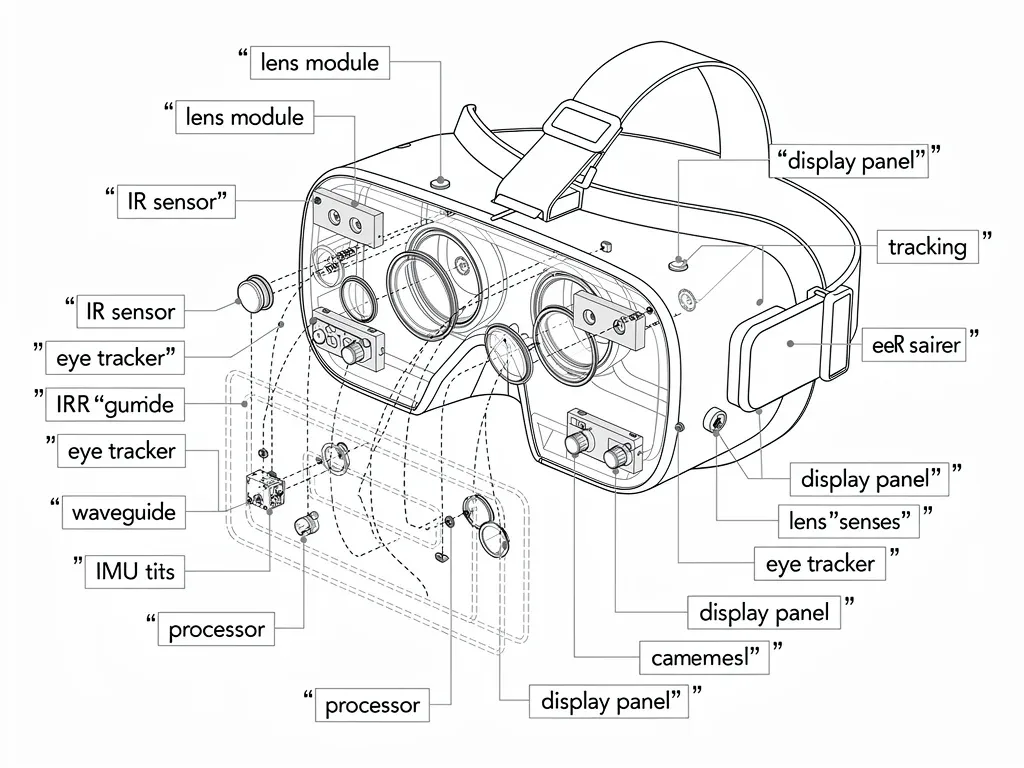
Beyond current VR capabilities
Display technology is another area ripe for significant advancement. We can expect higher resolution per eye, potentially pushing towards 4K or even 8K, coupled with micro-OLED panels for superior contrast and true blacks. This, combined with an expanded field of view (possibly approaching 120-140 degrees), would create a visual experience far more akin to natural human vision.
- Wireless freedom: Potentially untethered operation for unrestricted movement.
- Next-gen displays: Micro-OLED panels with ultra-high resolution for stunning visuals.
- Expanded field of view: Enhancing peripheral vision for greater immersion.
- Advanced audio integration: Spatial audio that dynamically adapts to head movements, creating a realistic soundscape.
- Biometric feedback: Sensors that can track user heart rate or other physiological data to adapt game difficulty or ambiance.
The integration of advanced eye-tracking will undoubtedly be refined, not just for foveated rendering but also for more natural avatar expressions in social VR experiences. Hand tracking, without the need for controllers, is also a strong possibility, allowing for more intuitive interactions within virtual environments. Imagine manipulating objects in a game simply by using your real hands, with the headset accurately mirroring your movements.
Furthermore, Sony might explore deeper integration with augmented reality (AR) capabilities, allowing for mixed-reality experiences that blend virtual elements with the real world. This could open up entirely new gameplay paradigms and applications beyond traditional gaming. The continuous evolution of PSVR 3 development promises a truly transformative experience for gamers.
These expected features represent not just upgrades, but a fundamental rethinking of the VR experience, aiming to make it more seamless, immersive, and accessible. The advancements in display, tracking, and interaction will collectively push the boundaries of what virtual reality can achieve.
Impact on the gaming industry and consumers
The launch of PSVR 3, particularly with its advanced features and anticipated integration with future PlayStation consoles, is poised to have a profound impact on both the gaming industry and consumers. For the industry, it signals a renewed commitment from a major player to the VR space, potentially spurring further investment and innovation from competitors and developers alike. A successful PSVR 3 could solidify VR’s position as a core gaming platform, rather than a niche accessory.
Developers will benefit from more powerful hardware, allowing them to create richer, more complex, and visually stunning virtual worlds. The enhanced capabilities will enable new gameplay mechanics and narrative structures that are currently impossible with existing VR technology. This will likely lead to a surge in high-quality VR content, attracting a broader audience.
Consumer benefits and market expansion
For consumers, PSVR 3 development promises an unparalleled gaming experience. The combination of high-resolution displays, wider field of view, precise tracking, and intuitive controls will make virtual worlds more believable and engaging than ever before. This could lead to a significant expansion of the VR user base, drawing in gamers who may have been hesitant to adopt VR due to past limitations.
- Broader game selection: More developers investing in high-quality VR titles.
- Enhanced immersion: A more realistic and engaging virtual experience.
- Increased accessibility: Improved comfort and ease of use for a wider audience.
- New social experiences: More natural and expressive interactions in social VR platforms.
The potential for wireless operation and improved ergonomics will also make VR more accessible and comfortable for extended play sessions, addressing a common pain point for many users. Moreover, if PSVR 3 successfully integrates AR capabilities, it could introduce consumers to mixed-reality experiences, blurring the lines between gaming and everyday life applications.
The competitive landscape will also be affected. With Sony pushing the envelope, other VR manufacturers will be compelled to innovate further, leading to a healthy cycle of competition and advancement. This benefits everyone, as it drives down costs and improves the quality of VR technology across the board. The anticipation surrounding PSVR 3 development is already generating buzz, setting the stage for its eventual impact.
Ultimately, PSVR 3 has the potential to be a game-changer, not just for Sony but for the entire virtual reality ecosystem. Its success could accelerate the adoption of VR, making it a more integral part of the mainstream entertainment landscape.
Comparing PSVR 3 to current and competing VR headsets
To truly appreciate the significance of the rumored PSVR 3 development, it’s essential to compare its potential capabilities against the current generation of VR headsets, including its predecessor, PSVR 2, and offerings from competitors like Meta, Valve, and Apple. Each of these platforms has its strengths and weaknesses, but PSVR 3 aims to set a new benchmark, particularly within the console gaming ecosystem.
PSVR 2, while a significant upgrade from the original, still operates within certain constraints. Its wired connection, while simpler than many PC VR setups, still limits movement. Its resolution and field of view, while good, can be surpassed by high-end PC VR headsets. PSVR 3 is expected to address these areas directly, pushing beyond the current state-of-the-art.
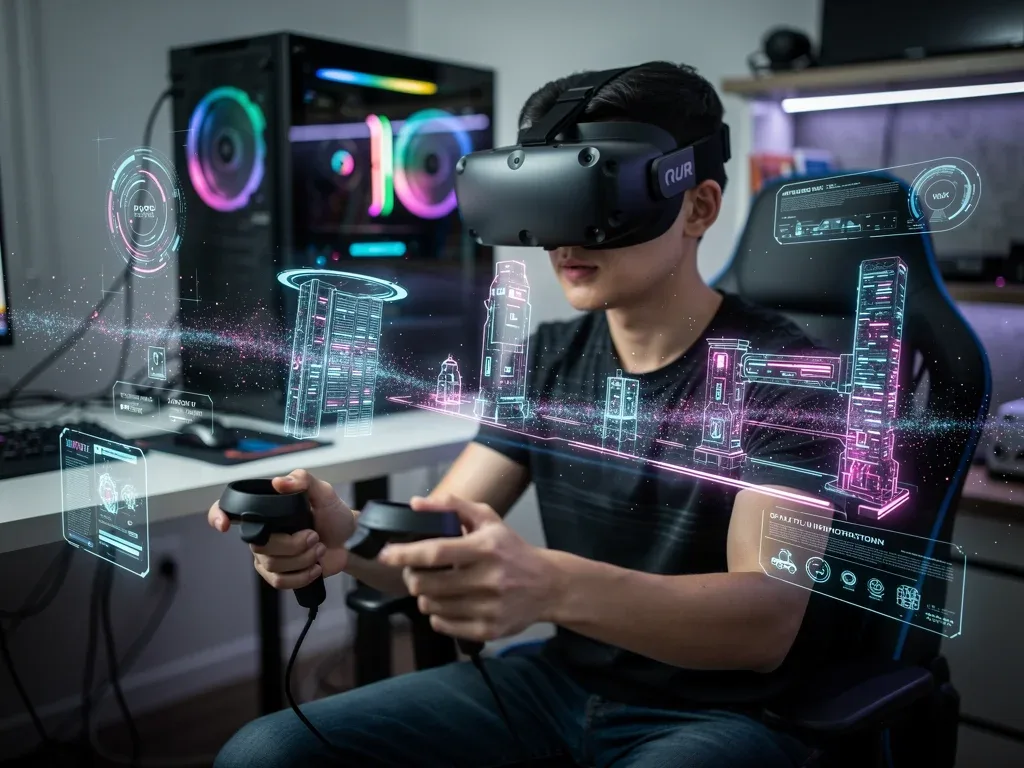
Outperforming the competition
When compared to Meta’s Quest line, which prioritizes standalone functionality and accessibility, PSVR 3 will likely leverage the raw power of a dedicated console to deliver superior graphical fidelity and complex simulations. While the Quest offers portability, PSVR 3 will aim for the ultimate tethered (or high-bandwidth wireless) graphical experience that a powerful console can provide. The Apple Vision Pro, while groundbreaking in its mixed-reality capabilities and display quality, comes with a premium price point, positioning PSVR 3 as a more accessible, gaming-focused alternative with potentially comparable visual fidelity.
- PSVR 2: PSVR 3 aims for significant upgrades in resolution, FOV, and potentially wireless operation.
- Meta Quest: PSVR 3 will likely offer superior graphical power due to console tethering, focusing on high-fidelity gaming.
- High-end PC VR: PSVR 3 could match or exceed some PC VR headsets in display quality and tracking, with a more streamlined user experience.
- Apple Vision Pro: PSVR 3 targets a dedicated gaming audience with potentially comparable visual quality at a more consumer-friendly price point.
Valve’s Index, known for its wide field of view and precise tracking, represents the high-end of PC VR. PSVR 3’s patent suggests Sony is aiming for similar or even better FOV and tracking, but within a more integrated, console-centric ecosystem. The key differentiator for PSVR 3 will be its seamless integration with the PlayStation platform, offering a curated and optimized experience that is often harder to achieve with the fragmented PC VR landscape.
Ultimately, PSVR 3 development is about delivering a premium VR gaming experience that is both technologically advanced and user-friendly. By focusing on areas like wireless freedom, next-gen displays, and refined tracking, Sony intends to carve out a dominant position in the console VR market, offering a compelling alternative to both standalone and high-end PC VR solutions. The ambition behind PSVR 3 development is clear: to deliver an experience that truly stands apart.
The future of PlayStation VR: beyond gaming
While gaming remains the core focus for PlayStation VR, the continuous evolution, as evidenced by the intense PSVR 3 development, suggests a future where the platform extends beyond traditional entertainment. Virtual reality technology has immense potential in various sectors, and Sony, like other tech giants, is likely exploring these broader applications for its next-generation headset. The immersive capabilities of VR can be harnessed for more than just playing games, opening up new avenues for productivity, education, and social interaction.
Imagine using PSVR 3 for virtual workspaces, collaborating with colleagues in a shared virtual environment, or attending immersive educational lectures that transport you to historical sites or distant galaxies. The high fidelity and advanced tracking promised by PSVR 3 could make these non-gaming applications far more practical and engaging than current VR solutions allow.
Expanding horizons for VR applications
The potential for social VR experiences is also significant. With more realistic avatars, intuitive hand tracking, and advanced spatial audio, PSVR 3 could offer a truly compelling platform for virtual hangouts, concerts, and events. This moves beyond simple communication to truly feeling present with others in a shared virtual space. The patent’s emphasis on comfort and prolonged use also supports these extended, non-gaming applications.
- Virtual workspaces: Collaborative environments for remote work and meetings.
- Educational platforms: Immersive learning experiences for students of all ages.
- Social VR: Enhanced platforms for virtual gatherings, concerts, and events.
- Creative tools: Intuitive interfaces for 3D modeling, art, and design in VR.
Furthermore, the integration of augmented reality (AR) elements, as hinted at by some of Sony’s broader patent activities, could transform PSVR 3 into a versatile mixed-reality device. This would allow users to overlay virtual information onto their real-world environment, creating hybrid experiences that could be beneficial for tasks like interior design, remote assistance, or even interactive shopping. The vision for PSVR 3 development is clearly expansive.
Sony’s investment in VR is not just about competing in the gaming market; it’s about positioning itself at the forefront of a burgeoning technological shift. By designing PSVR 3 with versatility in mind, Sony can ensure its relevance in an increasingly interconnected and digitally augmented world, extending its reach far beyond the confines of the living room. The future of PlayStation VR, spearheaded by PSVR 3 development, looks incredibly promising and multifaceted.
| Key Aspect | Description |
|---|---|
| Patent Insights | Sony’s recent patent filings detail advanced optical systems, hybrid tracking, and integrated haptics, indicating next-gen VR development. |
| Launch Window | A 2026/2027 release is projected, allowing for technological maturity and synergy with future PlayStation consoles. |
| Expected Features | Wireless connectivity, micro-OLED displays, wider FOV, and advanced hand tracking are among the anticipated enhancements. |
| Industry Impact | PSVR 3 could drive significant innovation, expand the VR user base, and solidify VR’s position as a core gaming platform. |
Frequently asked questions about PSVR 3 development
What specifically suggests PSVR 3 development is underway?▼Recent patent filings by Sony detail advanced virtual reality technologies, including novel optical systems, enhanced tracking mechanisms, and improved comfort features. While not explicitly named ‘PSVR 3,’ these innovations strongly align with a next-generation PlayStation VR headset, indicating active development.
Why is the launch window estimated for 2026/2027?▼This timeframe aligns with typical product development cycles for complex hardware. It allows sufficient time for new technologies to mature, for Sony to integrate PSVR 3 with its next console, and for game developers to create compelling launch titles. PSVR 2 launched in early 2023, making a 3-4 year gap plausible.
What key features can we expect from PSVR 3?▼Anticipated features include wireless connectivity, higher-resolution micro-OLED displays, a wider field of view, advanced eye and hand tracking, and integrated haptic feedback directly on the headset. These are designed to provide a more immersive and comfortable user experience.
How will PSVR 3 compare to other VR headsets like Meta Quest or Apple Vision Pro?▼PSVR 3 is expected to leverage console power for superior graphics compared to standalone headsets like Meta Quest. While the Apple Vision Pro offers high fidelity and AR, PSVR 3 will likely target a dedicated gaming audience with potentially comparable visuals at a more accessible price point.
Will PSVR 3 be used for more than just gaming?▼While gaming remains primary, the advanced capabilities of PSVR 3 could extend to virtual workspaces, educational platforms, and enhanced social VR experiences. Sony may also explore mixed-reality applications, blending virtual elements with the real world, expanding its utility beyond traditional entertainment.
Conclusion
The patent filings from Sony provide a compelling glimpse into the future of virtual reality with the strong indication of active PSVR 3 development. With a potential launch window targeting 2026 or 2027, the next iteration of PlayStation VR promises to deliver significant technological advancements, including wireless freedom, next-generation displays, and sophisticated tracking. These innovations are set to redefine immersive gaming, offering unparalleled visual fidelity and interaction. Beyond gaming, PSVR 3 is poised to explore broader applications in education, social interaction, and productivity, solidifying Sony’s position at the forefront of the evolving VR landscape. The anticipation for PSVR 3 development underscores a vibrant future for virtual reality, promising transformative experiences for both the gaming industry and consumers worldwide.