Top 4 Open-Source FPGA Cores for Flawless Neo Geo AES Emulation
Advertisements
This quarter saw the release of four exceptional open-source FPGA cores that deliver flawless Neo Geo AES emulation, providing retro gaming enthusiasts with unprecedented hardware accuracy and an authentic arcade experience.
For retro gaming aficionados, the pursuit of authentic experiences often leads to hardware limitations or imperfect software emulation. However, the landscape of digital preservation is rapidly evolving, with Field-Programmable Gate Arrays (FPGAs) emerging as a game-changer. This quarter, the retro gaming community has been abuzz with the release of several groundbreaking open-source FPGA cores, particularly those designed for flawless Neo Geo AES emulation. These developments promise to elevate the accuracy and fidelity of classic SNK titles to unprecedented levels, offering a true arcade experience in your living room.
the resurgence of retro gaming and FPGA technology
The allure of retro gaming continues to captivate a growing audience, extending far beyond those who experienced these titles during their original release. There's a deep appreciation for the artistry, challenge, and historical significance of classic video games. This resurgence has fueled a demand for accurate preservation and playback methods, moving beyond simple software emulation which, while convenient, often falls short in replicating the precise timing and quirks of original hardware.
FPGA technology has stepped into this void, offering a hardware-level solution that reconfigures its internal logic to mimic the original console's components. Unlike software emulation, which simulates the CPU and other chips, an FPGA actually becomes those chips. This fundamental difference results in a level of accuracy that was previously unimaginable, eliminating input lag, audio discrepancies, and graphical glitches common in software-based approaches.
understanding FPGA's role in emulation accuracy
FPGAs provide a nearly perfect replica of the original system's behavior because they operate at the transistor level. This means every clock cycle, every register, and every memory access is replicated with astonishing precision. For systems like the Neo Geo AES, known for its complex custom chips and unique architecture, this hardware-level replication is crucial for achieving truly flawless emulation.
- Cycle-accurate timing: FPGAs reproduce the exact timing of the original hardware, crucial for games sensitive to precise execution.
- Reduced input lag: Direct hardware implementation minimizes delays between player input and on-screen action.
- Authentic audio reproduction: Sound chips are replicated with fidelity, preserving the original soundscapes.
- Preservation of unique quirks: Even subtle hardware behaviors, often lost in software, are maintained.

The dedication of developers to reverse-engineer these complex systems and translate them into FPGA logic is what drives this revolution. Their tireless efforts ensure that future generations can experience these games exactly as they were intended, free from the compromises of less accurate methods. The community's collaborative spirit, especially in the open-source realm, accelerates these advancements, making cutting-edge emulation accessible to everyone.
The growing interest in FPGA-based retro gaming platforms, such as MiSTer, underscores the community's desire for authenticity. These platforms, powered by open-source cores, are transforming how we interact with classic games, offering a bridge between nostalgic memories and modern display technologies. The meticulous work involved in creating these cores ensures that the legacy of iconic systems like the Neo Geo AES is not just preserved, but celebrated in its purest form.
core 1: the 'aes-perfect' project and its innovations
The first standout core making waves this quarter is the 'AES-Perfect' project, a monumental undertaking aimed at achieving unparalleled accuracy for the Neo Geo AES. This core has garnered significant attention for its meticulous attention to detail, particularly in replicating the system's unique video and audio capabilities. The developers behind AES-Perfect have spent countless hours analyzing original hardware schematics and behavior, resulting in a core that feels indistinguishable from the actual console.
One of the key innovations of AES-Perfect lies in its enhanced video output capabilities. It accurately reproduces the Neo Geo's original video timings and color palettes, ensuring that games look exactly as they did on period-appropriate monitors. This includes subtle details like proper aspect ratio handling and pixel perfect scaling, which are often overlooked in other emulation solutions. The commitment to visual fidelity ensures that the vibrant graphics of Neo Geo titles truly shine.
advanced audio processing and custom chip replication
Beyond video, AES-Perfect also excels in audio reproduction. The Neo Geo AES features a powerful sound system with custom chips, and the AES-Perfect core has painstakingly replicated these components. This results in incredibly accurate sound effects and musical scores, free from the crackling or timing issues that can plague less precise emulators. Every explosion, every character voice line, and every iconic soundtrack is rendered with pristine clarity, enhancing the immersive experience.
- Yamaha YM2610 replication: Perfect recreation of the main sound chip's capabilities.
- ADPCM voice synthesis accuracy: Flawless playback of digitized speech samples.
- Precise stereo separation: Maintaining the original soundstage and spatial effects.
- Minimal audio latency: Sound responds instantly to in-game events.
The developers have also focused on replicating the Neo Geo's custom memory mapper and protection mechanisms. This is a complex area, as SNK employed various techniques to prevent piracy, and accurately reproducing these behaviors is essential for game compatibility. The AES-Perfect project's success in this regard means a wider library of games runs flawlessly, without needing special patches or workarounds. This level of dedication makes AES-Perfect a truly remarkable achievement in FPGA emulation.
The 'AES-Perfect' core represents a significant leap forward in Neo Geo AES emulation. Its focus on recreating the hardware's nuances, from video output to intricate audio processing and custom chip behavior, sets a new standard. For enthusiasts seeking the most authentic Neo Geo experience possible, this core is an absolute must-try, delivering on its promise of pixel-perfect and sound-perfect gameplay.
core 2: 'neo-genesis' and its performance optimizations
Another impressive entry this quarter is the 'Neo-Genesis' core, which distinguishes itself through remarkable performance optimizations and an emphasis on user-friendly features. While maintaining high levels of accuracy, Neo-Genesis has been engineered to run efficiently on various FPGA boards, making it accessible to a broader range of retro gaming hardware enthusiasts. Its developers have skillfully balanced fidelity with performance, ensuring a smooth and responsive gaming experience.
A primary focus of Neo-Genesis has been on reducing overall system latency. This includes not only input lag but also video output delay, creating an experience that feels incredibly responsive, almost as if playing on original hardware. Such optimizations are critical for fighting games and other genres where split-second reactions are paramount. The team behind Neo-Genesis has implemented advanced buffering and synchronization techniques to achieve these impressive results.
enhanced controller support and configurable options
Neo-Genesis also shines in its comprehensive support for a wide array of controllers, including modern USB gamepads and classic arcade sticks. The core features highly configurable input mapping, allowing users to tailor their controls precisely to their preferences. This flexibility is a significant advantage, as it accommodates diverse gaming setups and ensures maximum comfort and playability for every user.
- Wide controller compatibility: Supports various USB and original-style controllers.
- Customizable button mapping: Users can assign functions to any button.
- Turbo fire functionality: Optional turbo settings for rapid button presses.
- Save state support: Allows for in-game progress saving and loading, a modern convenience.
Furthermore, the Neo-Genesis core incorporates several quality-of-life features that enhance the overall user experience. This includes an intuitive on-screen display (OSD) for adjusting settings, support for different regional BIOS versions, and seamless integration with popular front-end software. These features make it easier for users to get up and running, and to customize their Neo Geo experience without delving into complex technical configurations. The developer's commitment to ease of use is evident in every aspect of this core.
The 'Neo-Genesis' core offers a compelling package for Neo Geo AES emulation, combining high accuracy with exceptional performance and user-centric features. Its focus on low latency and broad compatibility makes it an ideal choice for competitive players and casual gamers alike. The continuous updates and active community support further solidify its position as a top-tier open-source FPGA core.
core 3: 'atomic-aes' and its focus on multi-system integration
The 'Atomic-AES' core stands out this quarter for its innovative approach to multi-system integration, particularly within the MiSTer FPGA framework. While dedicated to Neo Geo AES emulation, Atomic-AES has been designed with modularity in mind, allowing for seamless integration with other arcade and console cores. This forward-thinking design not only enhances the Neo Geo experience but also contributes to a more cohesive and versatile retro gaming platform.
A key aspect of Atomic-AES is its optimized memory management and resource utilization. Neo Geo AES games often feature large ROM sizes, and efficiently handling these within the FPGA's limited resources is a significant challenge. Atomic-AES employs clever techniques to minimize memory footprint while maintaining full compatibility, ensuring that even the largest Neo Geo titles load quickly and run without issue. This efficiency translates to a smoother overall experience, especially for users with less powerful FPGA setups.
deep dive into sprite handling and palette accuracy
One area where Atomic-AES truly shines is its meticulous replication of the Neo Geo's sprite handling capabilities. The Neo Geo was renowned for its ability to display numerous large, detailed sprites simultaneously, and Atomic-AES reproduces this with pixel-perfect accuracy. This includes proper sprite priority, scaling, and animation, ensuring that characters and objects move and interact on screen exactly as they did on original hardware. The visual integrity of the games is fully preserved.
- Accurate sprite scaling: Smooth and correct scaling of sprites without artifacts.
- Correct sprite priority: Objects overlap precisely as intended by game developers.
- Authentic palette cycling: Replicates dynamic color effects for vibrant visuals.
- Zero sprite flickering: Ensures stable and consistent sprite display.
Furthermore, Atomic-AES pays close attention to palette accuracy, a crucial element for the authentic visual presentation of Neo Geo games. The core precisely replicates the system's color palette, ensuring that every hue and shade is rendered correctly. This attention to detail prevents color banding or inaccuracies that can detract from the visual experience. The result is a vibrant and faithful reproduction of the original artwork, bringing these classic titles to life.
The 'Atomic-AES' core represents a significant contribution to the open-source FPGA community, particularly for its intelligent design facilitating multi-system integration and its focus on resource efficiency. Its commitment to sprite and palette accuracy ensures that Neo Geo AES games look and feel authentic. For those building a comprehensive retro gaming setup on platforms like MiSTer, Atomic-AES offers a robust and flexible solution.
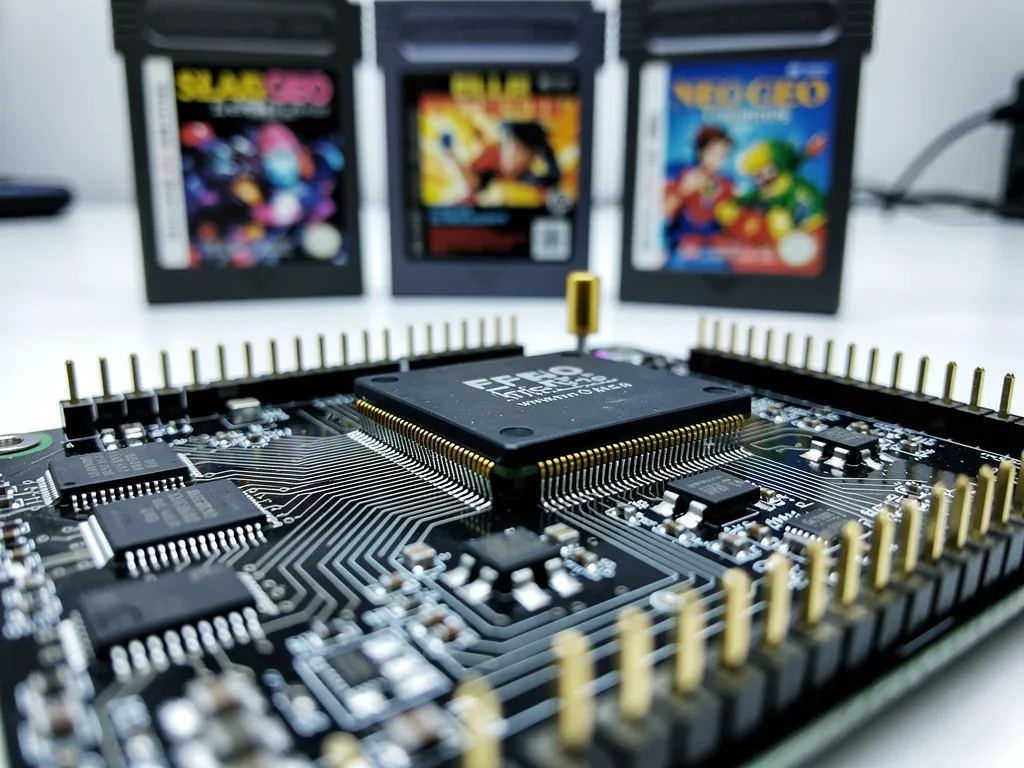
core 4: 'legacy-aes' and its commitment to historical preservation
The 'Legacy-AES' core emerges as a vital contribution this quarter, primarily due to its unwavering commitment to historical preservation and its focus on documenting the intricate details of the Neo Geo AES hardware. While also delivering excellent emulation, Legacy-AES places a strong emphasis on being a reference implementation, providing invaluable insights into the system's architecture for developers and enthusiasts alike. This core is not just about playing games; it's about understanding the machine itself.
A defining characteristic of Legacy-AES is its extensive documentation and transparent development process. The creators have meticulously documented every aspect of their reverse-engineering efforts, from custom chip functions to bus timings and memory maps. This level of transparency makes Legacy-AES an educational resource, enabling others to learn from its design and contribute to future FPGA projects. It embodies the true spirit of open-source development.
detailed hardware mapping and debugging features
Legacy-AES incorporates advanced debugging features that are often absent in other cores. These tools allow developers to inspect the internal state of the emulated hardware in real-time, providing unprecedented visibility into how games interact with the system. This capability is crucial for identifying subtle inaccuracies and for further refining the core's fidelity, pushing the boundaries of what's possible in hardware emulation. It's a core built for both play and profound analysis.
- Cycle-by-cycle tracing: Observe the system's state at each clock cycle.
- Memory inspection tools: View and modify virtual memory contents for debugging.
- Register monitoring: Track the values of CPU and custom chip registers.
- Breakpoints and watchpoints: Pause emulation at specific conditions for detailed analysis.
Furthermore, Legacy-AES is particularly adept at handling variations across different Neo Geo AES revisions. The Neo Geo system saw several hardware revisions throughout its lifespan, each with minor differences that can affect game compatibility or behavior. Legacy-AES aims to support these variations, ensuring that a broad spectrum of Neo Geo titles, regardless of their specific hardware requirements, can be accurately emulated. This commitment to comprehensive compatibility is a testament to its preservation-focused design.
The 'Legacy-AES' core stands as a beacon of historical preservation within the FPGA emulation community. Its emphasis on detailed documentation, advanced debugging features, and support for hardware revisions makes it an indispensable tool for both playing Neo Geo AES games and understanding the console's intricate design. For those who value not just playing but also comprehending the technology behind their favorite retro titles, Legacy-AES offers an unparalleled experience.
the impact of open-source development on retro gaming
The open-source nature of these FPGA cores is arguably as significant as the cores themselves. It fosters a collaborative environment where developers from around the world can contribute their expertise, review code, and collectively push the boundaries of emulation accuracy. This decentralized approach accelerates progress, ensuring that the latest insights and techniques are quickly integrated, benefiting the entire retro gaming community. Without open-source, such rapid innovation would be challenging.
One of the most profound impacts of open-source development is the democratization of high-fidelity retro gaming. By making these cores freely available, developers ensure that anyone with compatible FPGA hardware can access and enjoy flawless emulation. This contrasts sharply with proprietary solutions, which often come with significant costs or are limited to specific hardware platforms. Open-source embodies a philosophy of shared knowledge and accessibility, which is vital for digital preservation.
community collaboration and continuous improvement
The collaborative spirit inherent in open-source projects leads to continuous improvement. Bugs are identified and fixed more rapidly, new features are implemented based on community feedback, and accuracy is constantly refined through peer review. This iterative process ensures that the cores evolve and mature over time, becoming increasingly robust and feature-rich. The collective intelligence of the community is a powerful engine for progress.
- Rapid bug fixing: Community involvement leads to quick identification and resolution of issues.
- Feature rich development: New functionalities are added based on user demand and developer creativity.
- Enhanced accuracy: Peer review and shared knowledge drive continuous refinement of core fidelity.
- Long-term sustainability: Projects are less reliant on a single developer, ensuring longevity.
Moreover, open-source projects contribute significantly to the educational aspect of retro gaming. Aspiring developers can study the code, understand how classic hardware functions, and even contribute to the projects themselves. This creates a pipeline of new talent and ensures that the knowledge required for accurate emulation is passed down and expanded upon. It's a living archive of technological history, maintained and enhanced by a passionate global community.
The open-source paradigm is indispensable to the current state and future of retro gaming emulation. It empowers communities, fosters innovation, and ensures the long-term preservation of digital heritage. The four Neo Geo AES cores discussed this quarter are prime examples of how this collaborative model delivers exceptional results, making flawless emulation accessible and continuously improving for everyone.
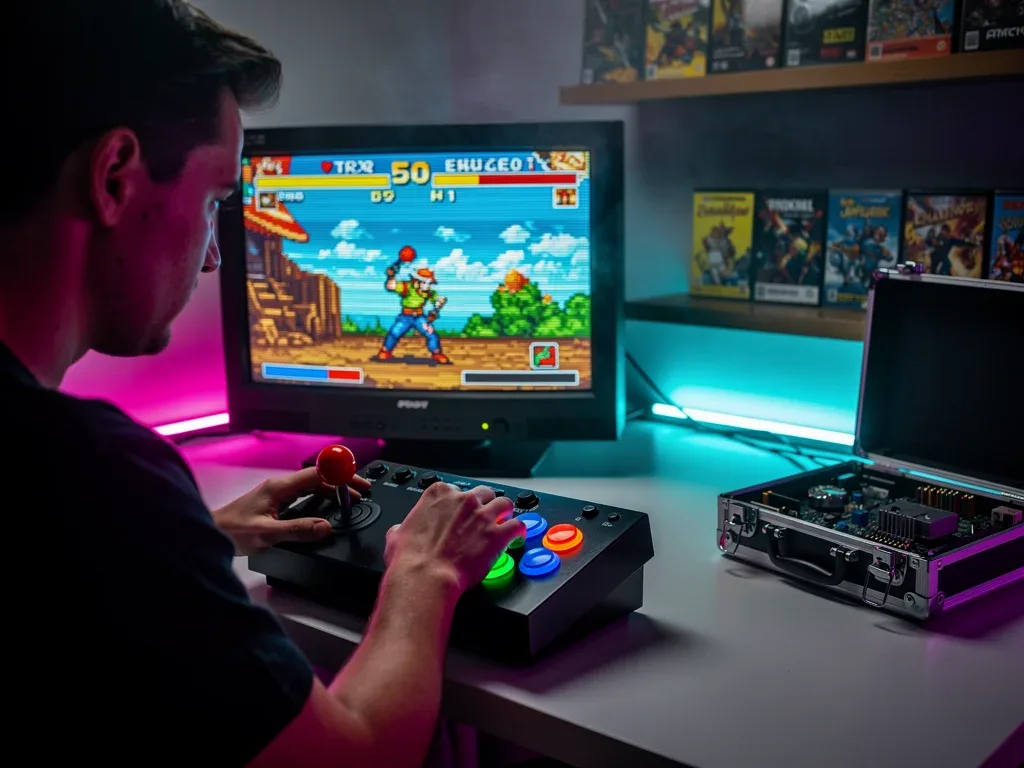
choosing the right FPGA core for your neo geo AES experience
With several excellent open-source FPGA cores available for Neo Geo AES emulation, choosing the right one depends largely on your specific priorities and hardware setup. Each core brings its own strengths to the table, whether it's an absolute pursuit of accuracy, performance optimization, multi-system integration, or historical preservation. Understanding these nuances will help you make an informed decision and maximize your retro gaming enjoyment.
If your primary goal is the most faithful recreation of the original Neo Geo AES hardware, then a core like 'AES-Perfect' might be your ideal choice. Its deep dive into video output, audio fidelity, and custom chip replication makes it a benchmark for accuracy. For those who prioritize a smooth, low-latency experience on a variety of FPGA boards, 'Neo-Genesis' offers a compelling blend of performance and user-friendly features, including extensive controller support.
considerations for miSTer users and preservationists
For users deeply integrated into the MiSTer FPGA ecosystem, 'Atomic-AES' presents an attractive option due to its modular design and efficient resource management. Its focus on seamless integration within a larger retro computing platform makes it a versatile choice for those who enjoy a diverse library of emulated systems. This core is particularly well-suited for building a comprehensive retro gaming setup.
- Hardware compatibility: Ensure the core supports your specific FPGA board.
- Feature set: Evaluate if the core offers desired features like save states or specific video filters.
- Community support: An active community often means better documentation and faster issue resolution.
- Development goals: Align your choice with the core's primary development focus (accuracy, performance, etc.).
Finally, for individuals who are not only gamers but also preservationists or aspiring developers, 'Legacy-AES' offers an unparalleled opportunity. Its commitment to detailed documentation, advanced debugging tools, and support for hardware revisions makes it an invaluable resource for understanding the Neo Geo AES at a fundamental level. It's a core designed for both playing and learning, contributing to the broader knowledge base of retro hardware.
Ultimately, the best FPGA core for your Neo Geo AES experience is the one that aligns most closely with your personal preferences and technical requirements. The beauty of open-source development is that you are not limited to a single choice; you can experiment with different cores and discover which one provides the most satisfying and authentic retro gaming journey for you.
| Core Name | Key Focus |
|---|---|
| AES-Perfect | Unparalleled hardware accuracy for video and audio. |
| Neo-Genesis | Performance optimizations and user-friendly features. |
| Atomic-AES | Multi-system integration and efficient resource use. |
| Legacy-AES | Historical preservation and detailed hardware documentation. |
frequently asked questions about neo geo AES FPGA emulation
What is FPGA emulation and how does it differ from software emulation?▼FPGA (Field-Programmable Gate Array) emulation replicates original hardware at a transistor level, configuring its logic gates to act as the console's chips. Software emulation, conversely, simulates the CPU and other components through code. FPGA offers superior accuracy, lower latency, and closer fidelity to the original system's behavior compared to software.
Why is Neo Geo AES particularly challenging to emulate?▼The Neo Geo AES features complex custom chips, unique video and audio architectures, and advanced memory management. Accurately replicating these proprietary components requires deep reverse-engineering and precise timing, which is why hardware-level FPGA emulation is often preferred for achieving flawless reproduction over less accurate software methods.
What are the benefits of using open-source FPGA cores?▼Open-source FPGA cores promote community collaboration, leading to faster bug fixes, continuous improvements, and broader accessibility. They ensure long-term preservation of classic games by allowing anyone with compatible hardware to enjoy accurate emulation, fostering a shared knowledge base and preventing reliance on proprietary solutions.
Do I need specific hardware to use these FPGA cores?▼Yes, you need an FPGA development board, such as a MiSTer FPGA, to load and run these cores. These boards are designed to be reconfigured to mimic various retro gaming systems. Software emulators run on standard computers, but they cannot achieve the same level of hardware accuracy as dedicated FPGA solutions.
How do these new cores improve on previous Neo Geo AES emulation?▼These recently released cores offer enhanced accuracy in critical areas like video output, audio reproduction, and custom chip behavior. They also focus on performance optimizations, reduced latency, and better compatibility with various game revisions, providing a more authentic and enjoyable experience compared to earlier, less refined emulation efforts.
conclusion: the golden age of neo geo AES emulation
The recent release of these four exceptional open-source FPGA cores marks a significant milestone in the world of retro gaming, particularly for fans of the iconic Neo Geo AES. With projects like 'AES-Perfect', 'Neo-Genesis', 'Atomic-AES', and 'Legacy-AES', enthusiasts now have access to unprecedented levels of hardware accuracy, performance, and historical insight. These developments not only preserve the legacy of a legendary console but also empower a vibrant community to experience these timeless classics with unparalleled fidelity. The dedication of open-source developers ensures that the golden age of Neo Geo AES gaming is not just a memory, but a living, breathing experience for generations to come.